
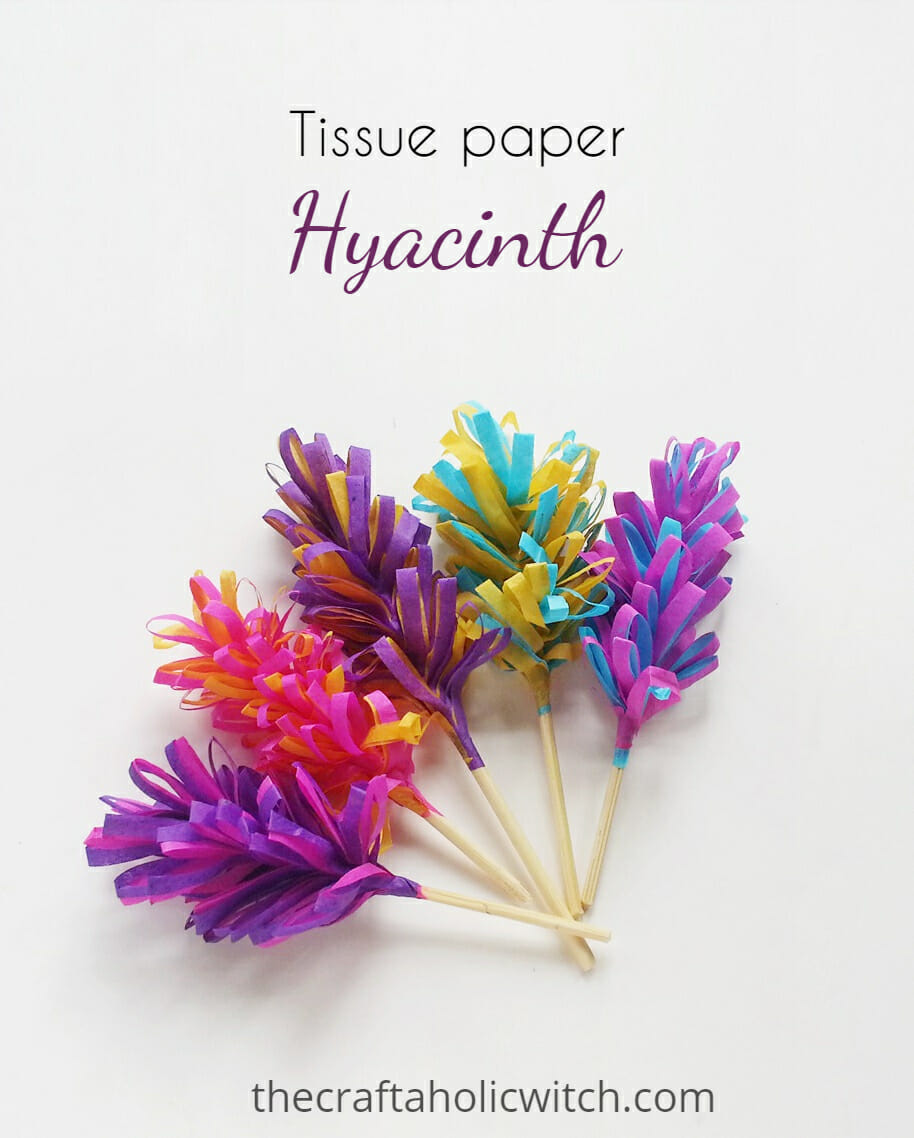
Tissue paper hyacinth flowers are fringed paper blooms that look just like real hyacinths, and each one takes about 2 minutes to make. You cut a two-color strip, fringe it with scissors, and roll it onto a stick. That’s the whole technique. They’re one of those beginner projects in our collection of paper flower tutorials that looks more involved than it actually is, which makes them genuinely fun to give as gifts.
Project Specifications
- Difficulty Level: Beginner-friendly (no prior craft experience needed)
- Cost: Under $2
- Time: About 2 minutes per flower
- Ages: 6 and up (with adult help for younger crafters)
- Perfect For: Gift box toppers, party decorations, spring table displays, kid crafts
What You’ll Need
- Scissors
- Craft tissue paper (2 colors per flower)
- Small sticks or skewers (for stems)
- Craft glue or a glue stick
There are hundreds more waiting for you.
Premium unlocks every printable template and pattern on the site, an ad-free read, the members' studio, and a fresh craft challenge every month. Founding pricing is open now, and the yearly plan is the best value.
Cancel anytime. Join the crafters already inside.
Step by Step Instructions
Step 1: Cut and Layer Two Tissue Paper Rectangles
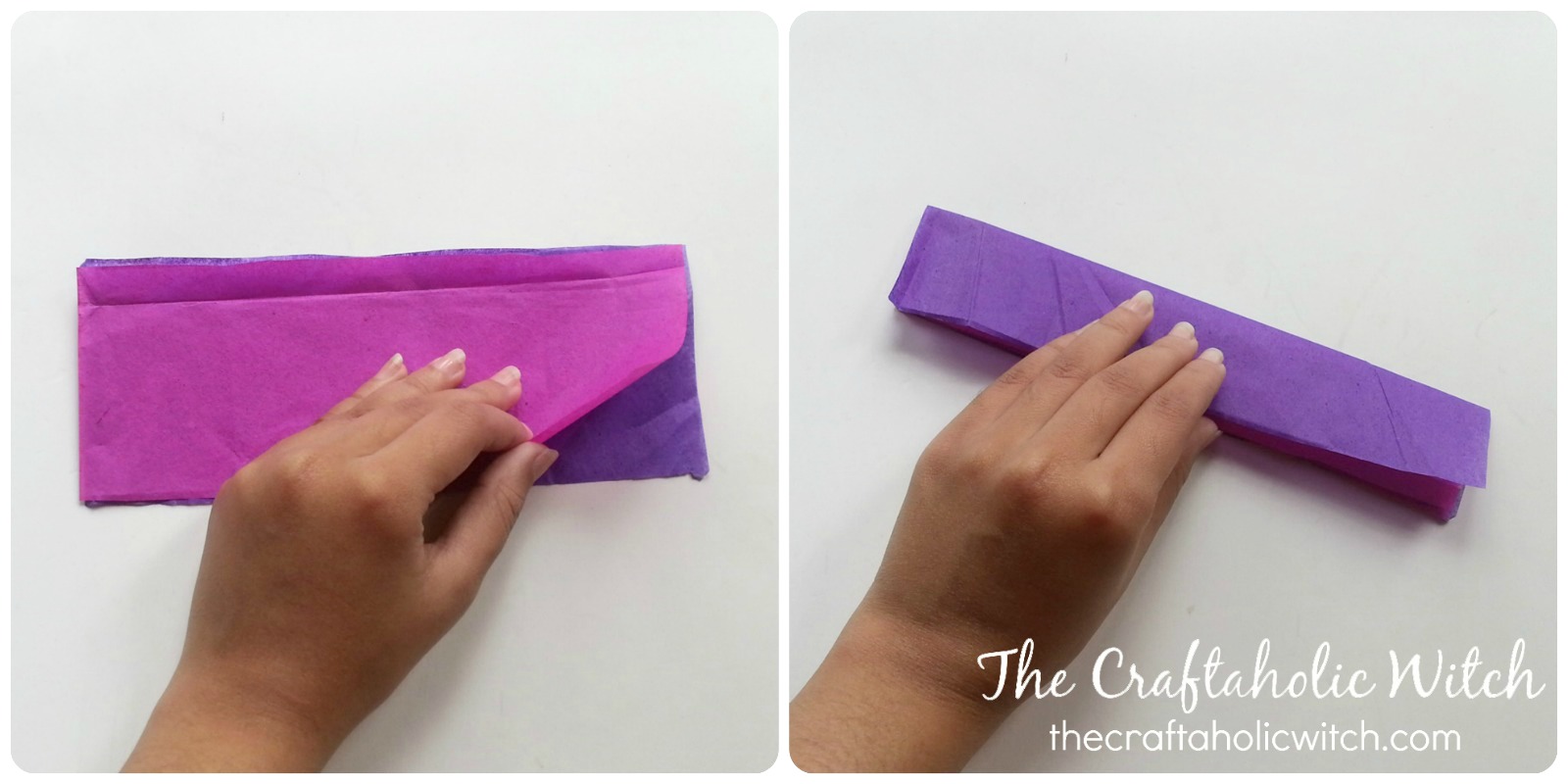
Cut two pieces of craft tissue paper into equal rectangles, one of each color. A strip roughly 4 inches wide and 10 inches long works well for a medium bloom. Stack the two pieces together so the edges line up, then fold both layers in half lengthwise so you end up with a long, narrow doubled strip.
If you’re putting together a mixed arrangement, have a look at our guide to drying and pressing flowers to pair your paper ones with real dried blooms.
Tip: The two colors show up separately in the finished flower, so pick two tones that look good together. Pink and purple work well, and so does white and pale blue.
Step 2: Cut Even Fringes Along the Folded Edge
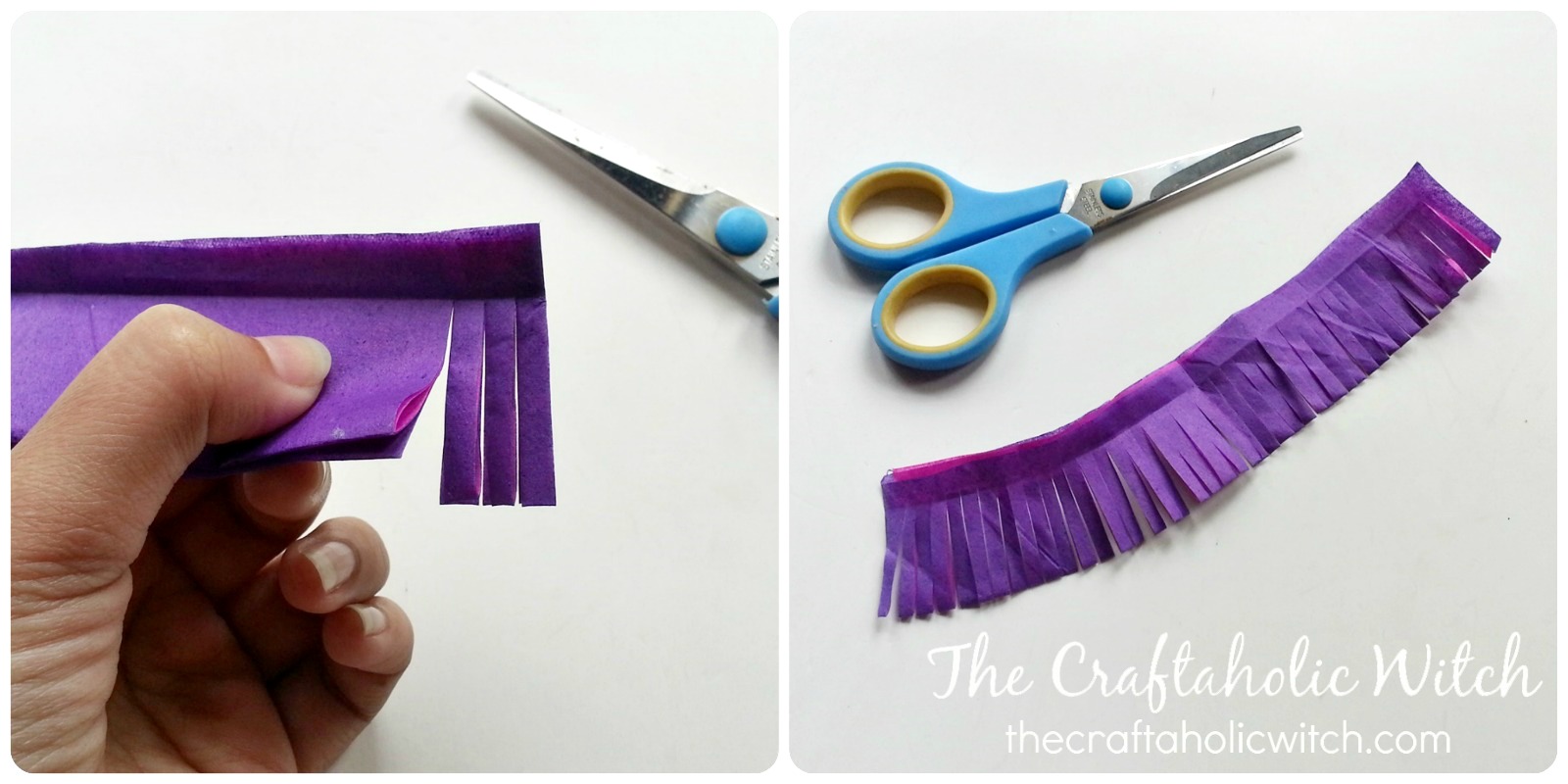
Hold the folded strip so the closed (folded) edge faces up. Cut small, even fringes down from this closed edge, stopping about 1 cm from the open bottom edge. Keep the fringes narrow and evenly spaced, around 3 to 4 mm wide each.
Leave that 1 cm uncut strip along the open edge intact. That’s the part you’ll glue to the stick, so don’t cut into it.
Tip: Uneven fringes aren’t a big problem. The rolled flower hides a lot of small irregularities. The narrower and more even your cuts, the fluffier the finished bloom will look.
Step 3: Glue the Base and Position the Stick
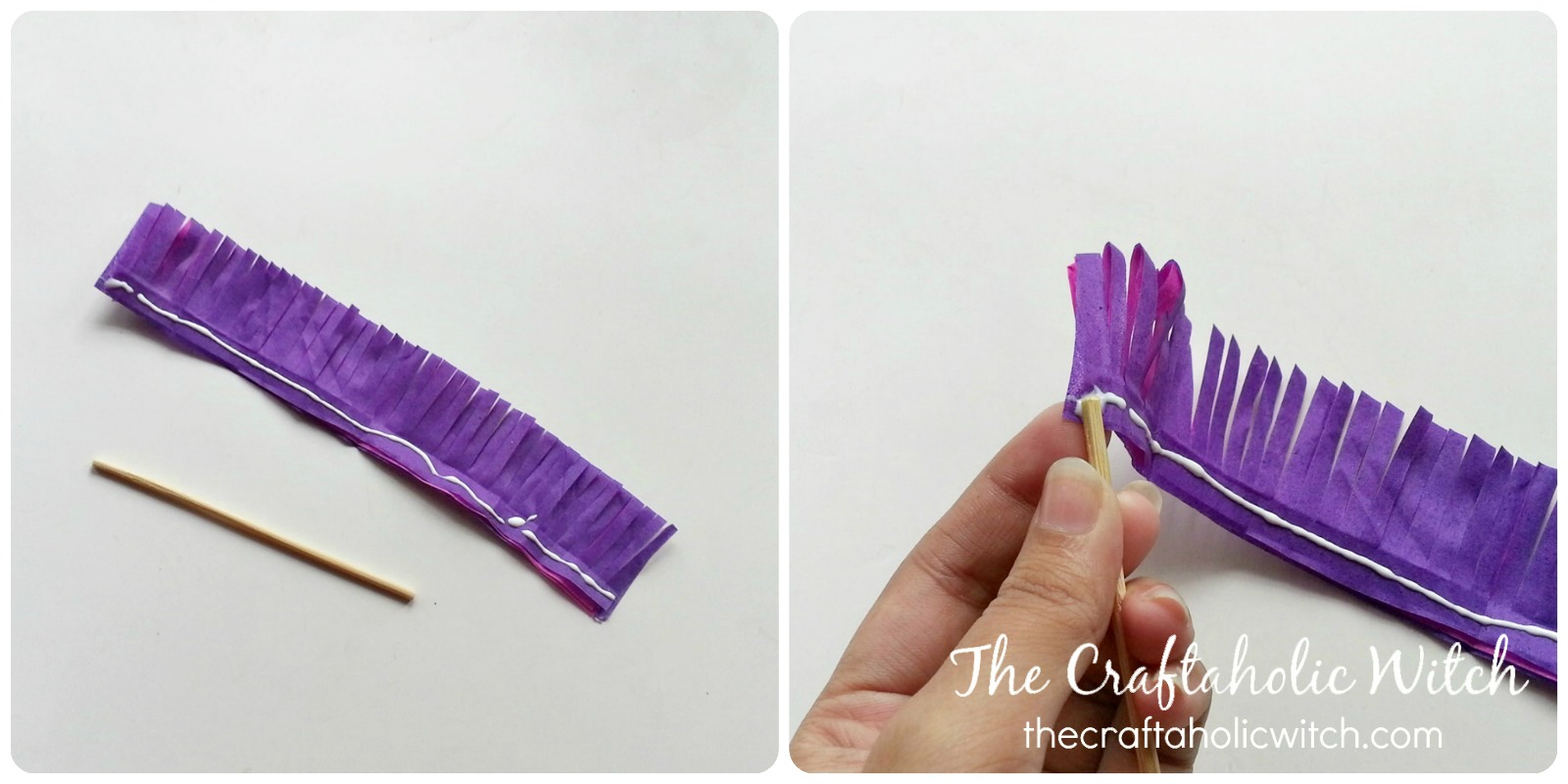
Take a small stick or wooden skewer for the stem. Apply a thin line of craft glue along the intact 1 cm strip at the open edge of the fringed paper.
Hold the glued strip at a slight angle against the top of the stick. The paper should sit a little vertical against the stick tip so it can wrap and build upward as you roll. If you’ve tried our ribbon rose flower tutorial before, the starting position here is similar.
Tip: Use just enough glue to tack the paper in place. Too much glue makes the base stiff and harder to roll smoothly.
Step 4: Roll the Fringed Paper Down Around the Stick
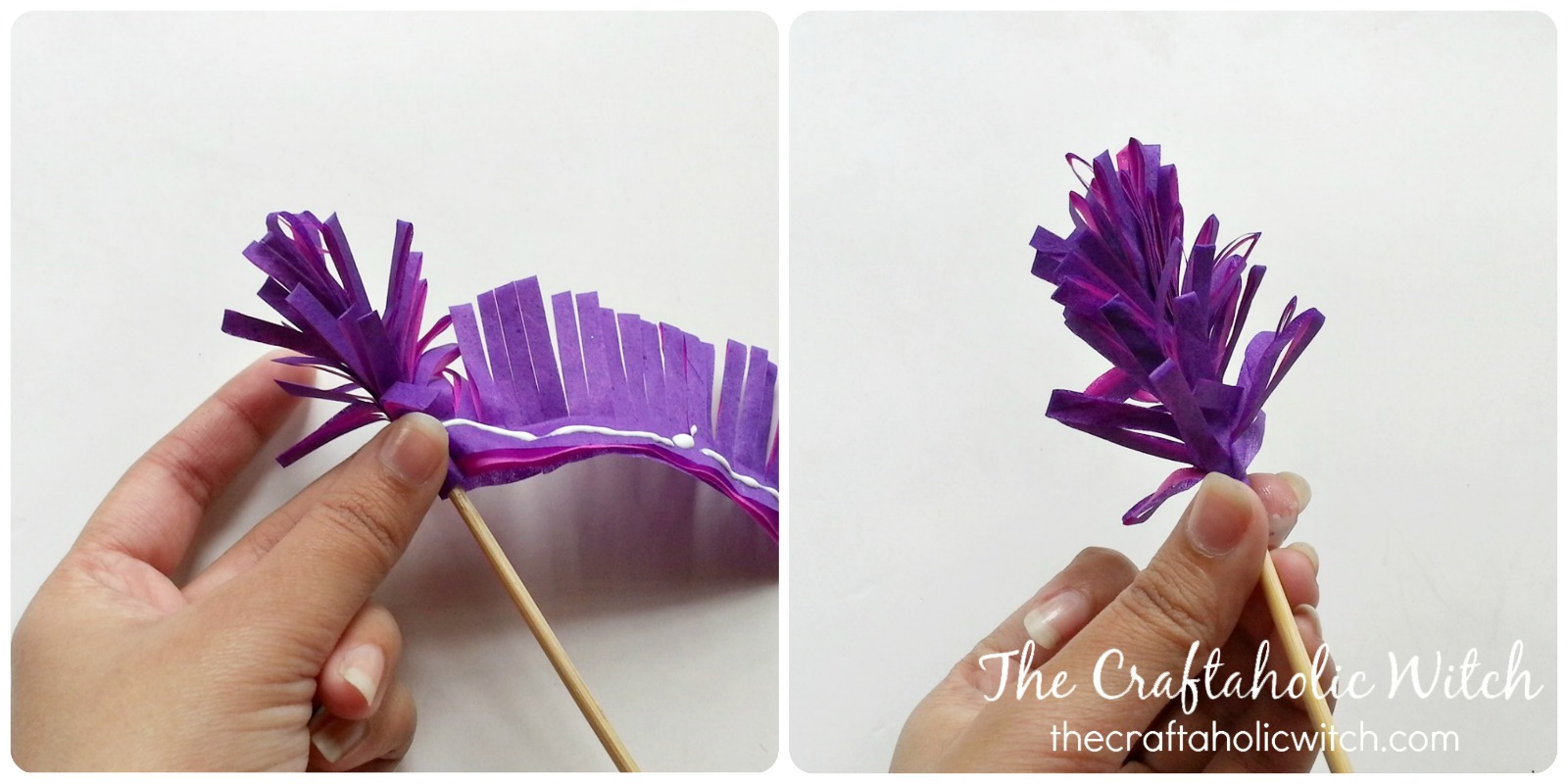
Starting from the glued end, roll the fringed paper around and down the stick. Keep the rolling tight and even, pressing the glued base strip against the stick as you go. Continue until you reach the end of the strip.
The fringes fan outward as you roll, and that’s what builds up the spiky, clustered look of the hyacinth bloom. Make several in different color combinations and you’ll have a small bouquet in under 15 minutes.
Finishing and Display Ideas
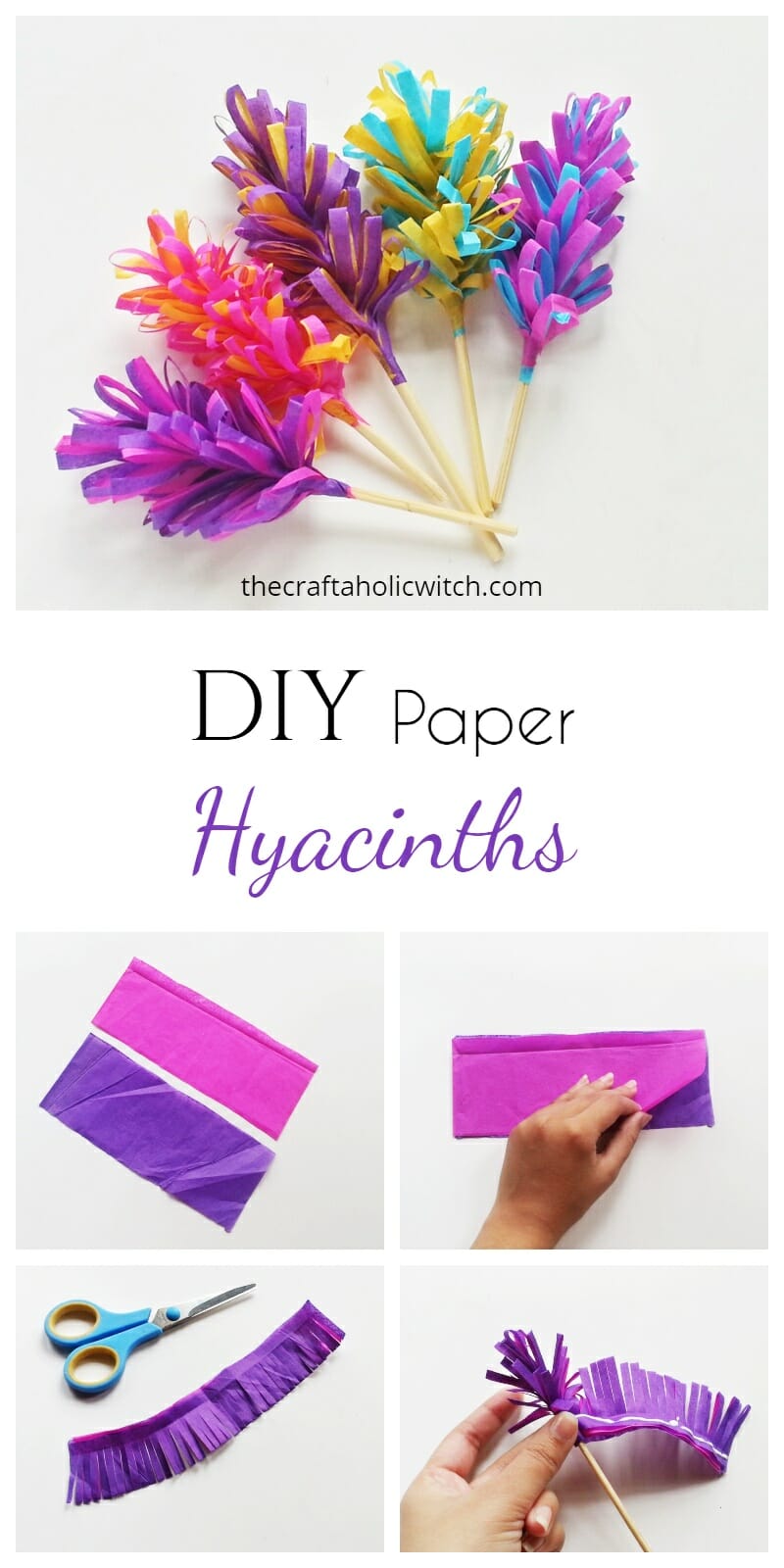
These flowers look great grouped in a small vase or tucked into a wrapped gift box as a topper. Because each one takes so little time, making a whole bunch in coordinating colors is easy. Try pinks and purples for spring, or white and silver for a winter or Christmas display.
For more ideas, browse our tissue paper flower tutorials. If you want to try a bigger paper flower project next, our paper dahlia wreath tutorial uses a similar layering technique on a much larger scale. If you enjoy working with paper beyond flowers, our paper luminaries tutorial is another simple project that uses tissue paper in a totally different way. Or if you want to mix paper crafting with jewelry making, our paper quilled pendant tutorial is a good next step.
Parent and Educator Tips
These flowers are a solid kids’ craft for ages 6 and up. The cutting and rolling steps build fine motor control, and choosing two colors to layer together is a simple way to practice color coordination. For classroom settings, pre-cut the paper rectangles in advance so kids can focus on the fringing and rolling. Younger crafters around ages 4 to 5 can join in with a grown-up holding the stick steady.
FAQ
Can I use crepe paper instead of tissue paper to make hyacinth flowers? Yes, crepe paper hyacinth flowers work well with this same method. Crepe paper is a little thicker and more textured, so the fringes hold their shape slightly better. The rolling and gluing steps are exactly the same.
How do I make the flowers fuller and more realistic-looking? Cut the fringes as narrow as possible, around 2 to 3 mm wide, and roll the strip tightly around the stick. You can also add a second layer by gluing a second fringed strip on top of the first before the glue fully sets, which doubles the volume of the bloom.
What kind of stick works best for the stem? Bamboo skewers, wooden coffee stirrers, and craft sticks all work well. For a more natural look, thin twigs cut to length are a good option. If you want a longer stem for a vase arrangement, extend a skewer with a length of floral wire wrapped in green tape.
0 Comments
Join the conversation
Log in to your Craftaholic Community account to comment, ask questions, and cheer on fellow makers.
Log in to comment