


Store-bought envelopes are never the size I actually need, so I fold my own origami envelopes now. All it takes is a sheet of rectangle or square paper and about ten minutes, no glue or tape.
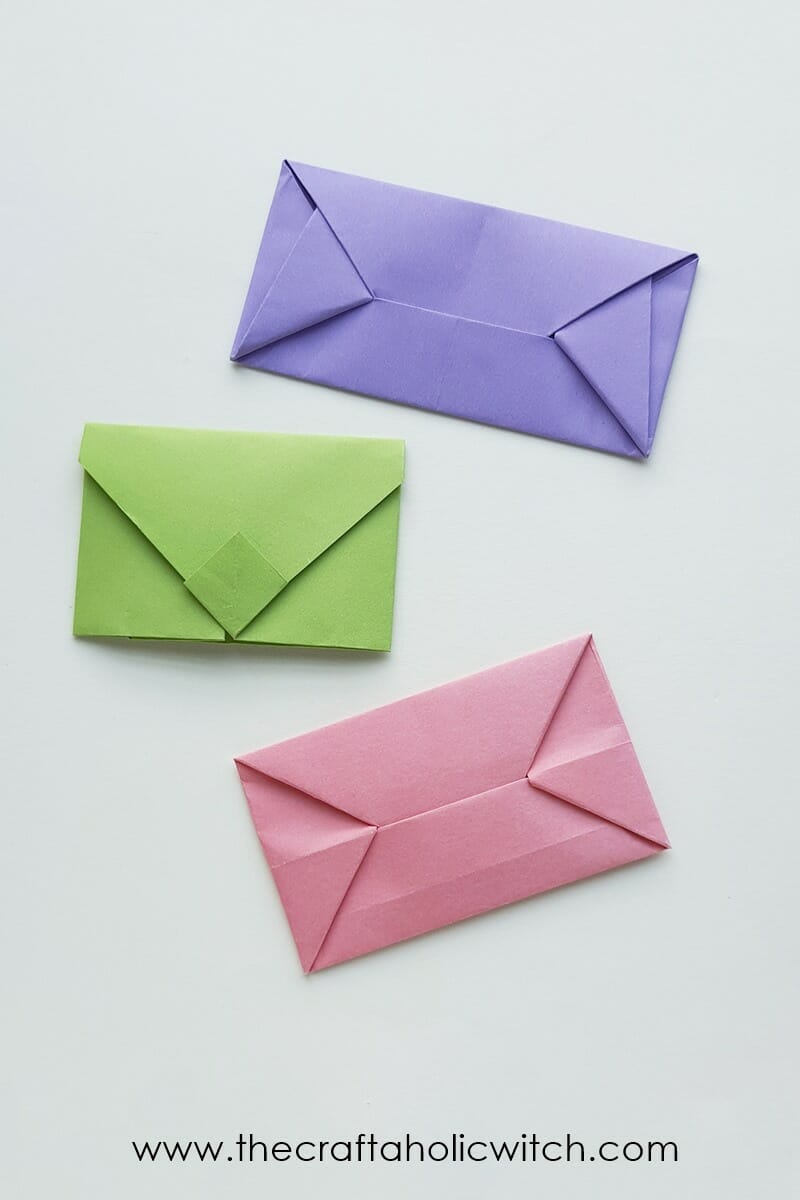
There are three styles here. A rectangular letterfold, made from a rectangle. A wider fold-lock envelope, folded from a square. And a diamond-lock envelope with a flap that tucks into its own pocket, which is my favorite for gifts. For something shaped specifically for Valentine’s Day or a love note, I’ve also got a separate origami heart envelope tutorial.
Cut your paper to size first if you want it exact, though a ruler and pencil are optional. Once you’ve folded each style once, your hands remember it.
Origami Envelope at a Glance
- Difficulty: Beginner
- Time: 5 to 10 minutes per envelope
- Cost: Under $1
- Ages: 8+ (younger kids will need help with the smaller folds)
- Best for: Cards, letters, gift money, and small handmade gifts
Join Craft Challenge: Craft Your Calm
Make something that brings you a sense of peace, share a photo, and tell us your story. It's free to enter, open to everyone, and the entry with the most reactions takes home a $100 gift card. Takes five minutes to join.
Entries close August 30, 2026. No purchase necessary.
What You Need to Make an Origami Envelope
Materials
- Colored craft paper or plain printer paper: one rectangle sheet for the letterfold style, and one square sheet for the other two. A slightly heavier paper holds a crisper crease than very thin paper.
Tools
- Ruler (optional), for measuring an exact rectangle or square if you’re cutting your own paper down to size.
- Scissors (optional), for trimming paper to size if you’re not starting from a pre-cut sheet.
Ask inside "Crafty Q&A" while you are making.
"Crafty Q&A" is free to join. Share your question, photo, or the exact step where you got stuck, and chat with other makers plus the Craftaholic Witch team. You can also join any discussion thread already happening inside the space.
How to Fold Paper into an Envelope (3 Techniques)
Technique 1: Rectangular Letterfold Envelope (Side-Tuck Style)
Step 1: Fold the Top Corners Down to Make a Triangle
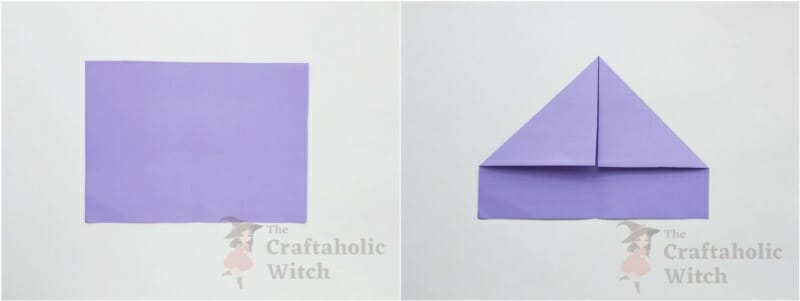
Lay your rectangle flat with the long side running left to right. Fold the top two corners down and in on a diagonal so their points meet at the center, leaving a tall triangle sitting on top of a short rectangular strip. Crease both folds firmly so the triangle holds its shape.
Step 2: Fold the Bottom Strip Up Twice
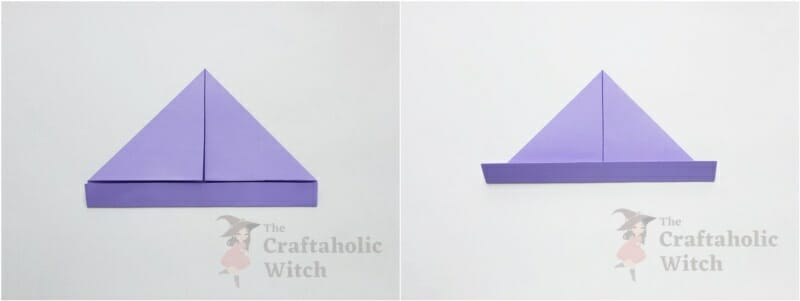
Fold the bottom edge of the strip up so it lines up with the base of the triangle, then crease. Fold that same edge up again along the new horizontal line, so the strip ends up doubled over into a thin band just under the triangle.
Step 3: Bring the Triangle Point Down and Fold In the Sides
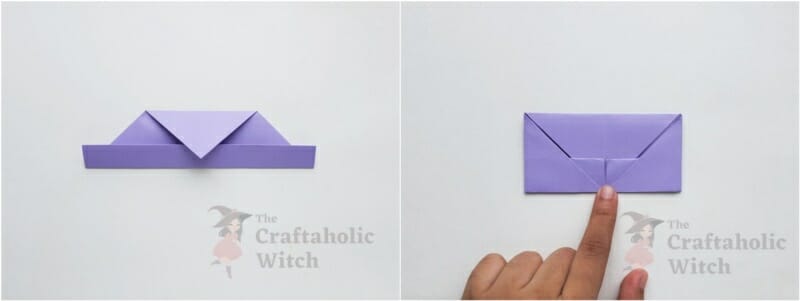
Fold the triangle’s top point down until it touches the folded strip below it. Using the two corners left at the top edge as your guide, fold the left and right sides in toward the middle so they overlap at the center.
Step 4: Open the Side Flaps, Then Close the Top Flap Over Them
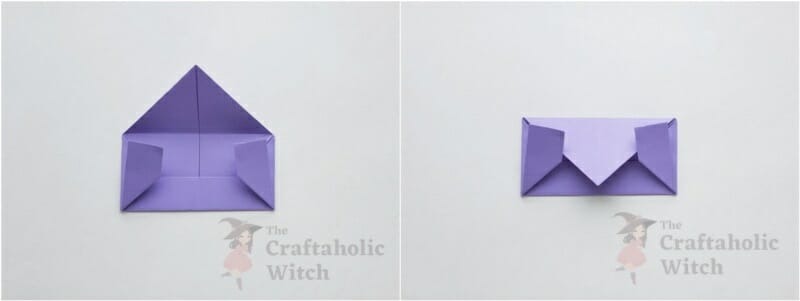
Lift the left and right side flaps so they stand open at roughly a 45-degree angle, this is what turns the flat shape into an actual pocket. Fold the top triangular flap back down over the opening.
Step 5: Tuck the Side Points Under to Seal It
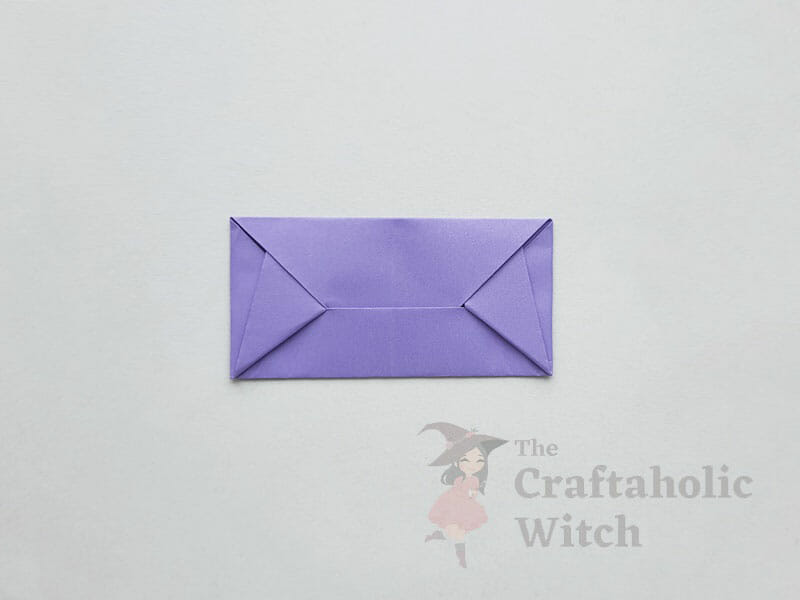
Tuck the loose top edge of each side flap underneath the top flap you just folded down. Press the whole seam flat, and the rectangular letterfold envelope is sealed, no glue needed.
Technique 2: Wide Panel Fold-Lock Envelope
Step 1: Fold the Square in Half to Start the Panel
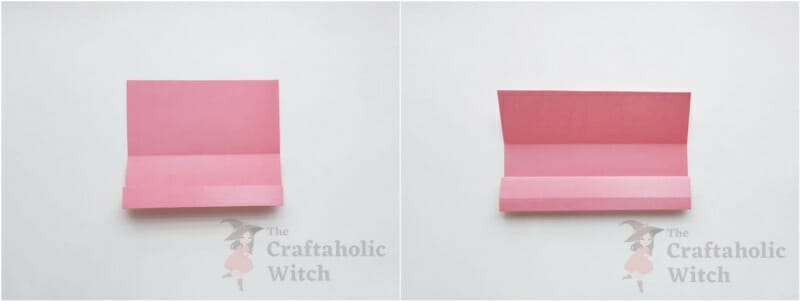
Fold your square of paper in half so you have a shorter front panel and a taller panel standing up behind it, and crease the fold well. This center fold is the base the rest of the envelope builds from.
Step 2: Fold the Standing Panel’s Corners In
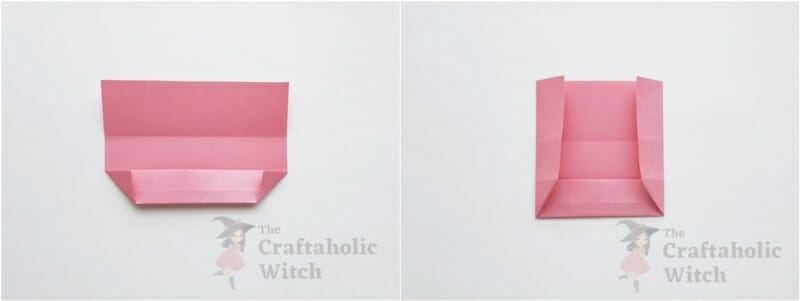
Fold the top corners of the standing panel in toward the center crease on a diagonal, so the panel narrows into a wide trapezoid with slanted sides. You’ll end up with an open pocket shape, wider at the base than at the top.
Step 3: Fold the Top Point Down to Form the Flap
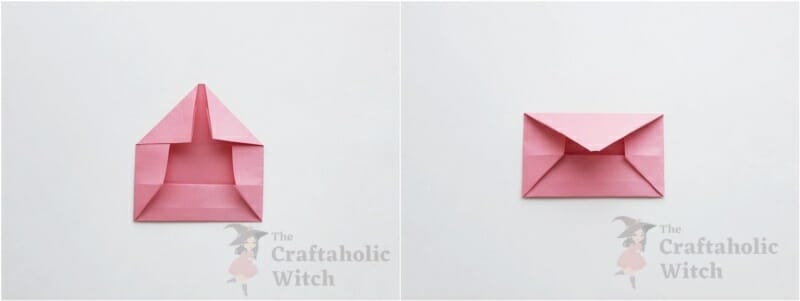
Fold the peak at the top down over the front of the pocket, this becomes the envelope’s flap. Tuck the point of the flap down into the fold at the base so it sits flat; you’ll see a small diamond crease form where it locks in place.
Step 4: Flatten the Seams to Finish
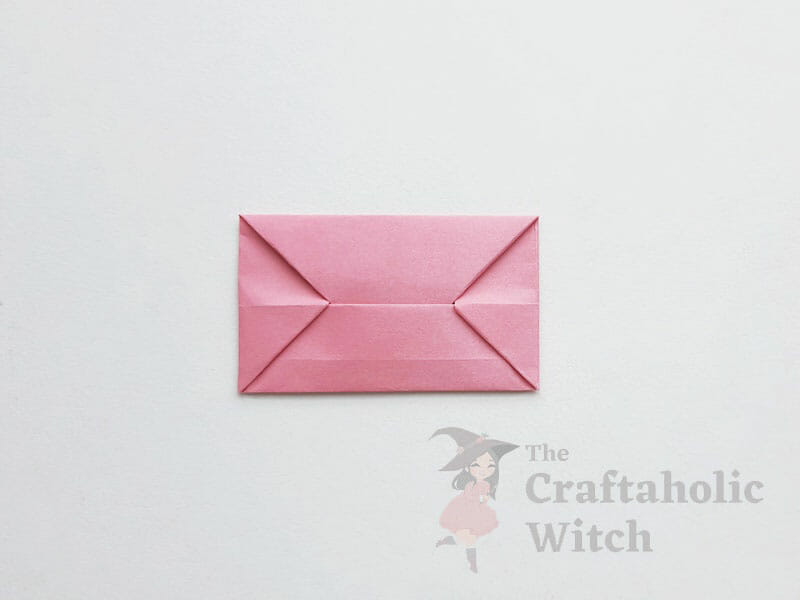
Press the top and bottom seams flat so the envelope lies smooth. The wide fold-lock envelope is done, with a slightly wider profile from starting out square instead of as a pre-cut rectangle.
Technique 3: Diamond Lock Envelope (Square Paper)
Step 1: Fold the Square in Half Diagonally
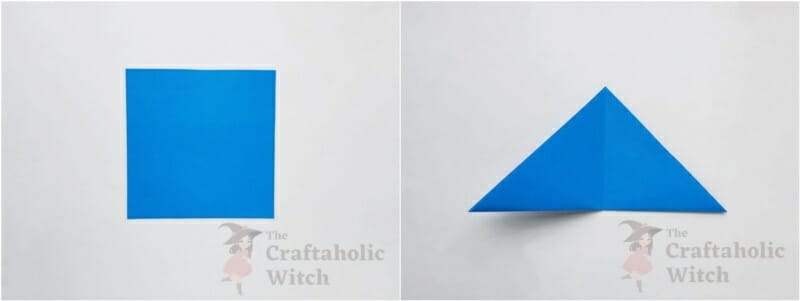
Fold your square of paper corner to corner so it forms a triangle with the point facing up, and crease firmly. Fold that triangle in half again, point to point, then unfold it. This leaves a faint center crease you’ll use to line up the next few folds.
Step 2: Fold the Bottom Corners Up to the Center Crease
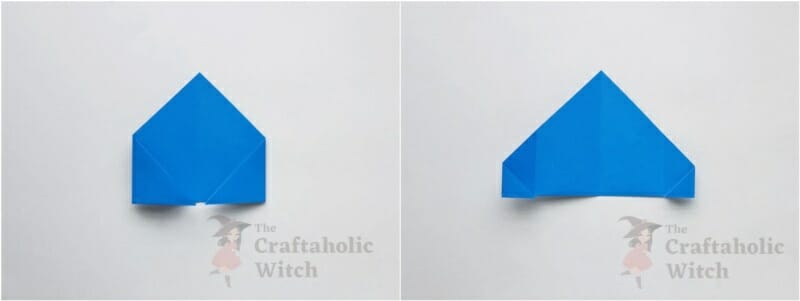
Fold the two bottom corners of the triangle up and in so their points meet near the middle, then unfold them to leave crease marks. Fold those same corners again, this time lining them up with the crease marks you just made, and leave this fold in place. You’ll end up with a flat-bottomed shape with two slanted sides meeting near the top, like a little house.
Step 3: Fold the Front Point Up, Then Fold In the Sides
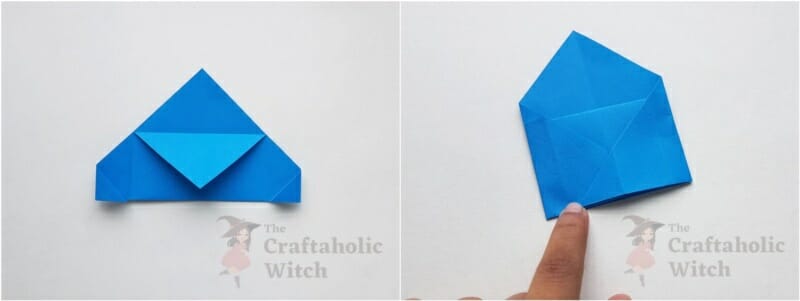
The front of your shape now has two layers. Fold the bottom point of the front layer up so it meets the top edge, and crease. Fold the left and right sides in toward the center crease, then unfold just one of the corners. That partial unfold is what opens up the pocket you’ll need for the next step.
Step 4: Shape the Diamond Pocket
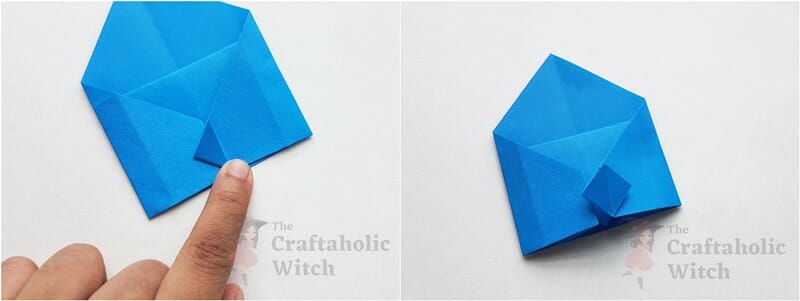
Fold that unfolded corner in half so it lines up with the center crease. Open up the triangle section and pull the folded layer out from inside the pattern so it sits flat on the front, this is what forms the small diamond pocket you can already see taking shape. The top of the envelope should now have an open, unfolded edge.
Step 5: Fold the Top Flap Down Into the Diamond Pocket
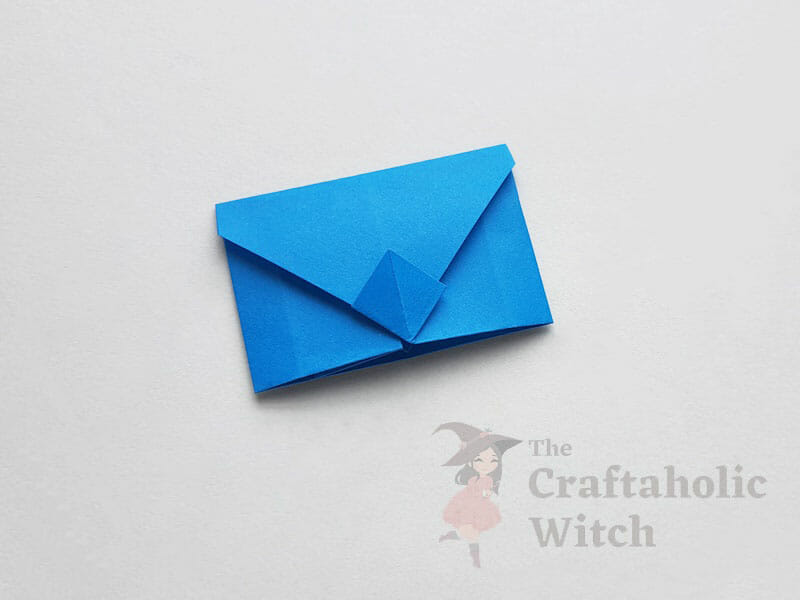
Fold the top corner of the open edge down to meet the bottom of the envelope, shaping it into a point as you go. Tuck the tip of that point into the diamond pocket on the front to lock it shut, no glue needed for this one either.
Share it in "I Made It" and let us cheer you on.
Post your finished make in "I Made It" so the community can celebrate it with you. Cheer on other makers too. Each month, the most loved craft wins 1 year of Craftaholic Premium ($59)
Tips for Folding No-Glue Origami Envelopes
- Regular printer paper folds fine, but paper in the 65 to 80 lb cardstock range holds its crease longer and feels sturdier if you’re mailing the envelope.
- Start with a larger sheet than you think you need. All three styles shrink to roughly half their original size once folded, so a standard 8.5×11 sheet makes a letter-sized envelope, and a 6×6 square makes something closer to gift-card size.
- Fold these from patterned or double-sided paper so the contrasting color shows on the flap and side points once the envelope is closed.
Which Envelope Style Should You Fold?
All three styles start from the same sheet of paper and lock shut the same way, with clever folds instead of glue. Here’s how they actually differ.
| Style | Paper Shape | Closure | Best For |
|---|---|---|---|
| Rectangular Letterfold | Rectangle | Side points tuck under the top flap | Longer letters and flat bills |
| Wide Fold-Lock | Square | Flap tucks into the base fold | Cards, gift tags, and wider items |
| Diamond Lock | Square, folded diagonally | Pointed flap tucks into a diamond pocket | Gifts and money, with a more decorative look |
Video Tutorial: How to Make an Origami Envelope
If you’re having trouble following the photos on any of the three styles, the video below walks through each fold in real time. Subscribe to our YouTube channel while you’re there so you catch new tutorials as they go up.
Frequently Asked Questions
Can I make an origami envelope with rectangle paper?
Yes, the rectangular letterfold style in this tutorial is built specifically for rectangle paper, including a standard sheet of A4 or letter paper. Just make sure your rectangle isn’t too close to square, or the side flaps won’t have enough length to fold in and lock.
What size paper works best for these envelopes?
A standard 8.5×11 or A4 sheet makes a letter-sized envelope for the rectangular letterfold style, while a 6×6 inch square works well for the other two if you want something closer to gift-card size. Smaller and larger paper both fold the same way, so you can scale up or down for whatever you’re mailing.
Can I really close these without any glue or tape?
Yes, all three styles lock shut through the folds themselves, either by tucking a flap into a diamond pocket or tucking side points under the top flap. They hold well for cards and letters, though I wouldn’t rely on them for anything heavy without reinforcing the seam.
Which of the three envelope styles works best for mailing?
The rectangular letterfold is the sturdiest choice for mailing since it’s built from a rectangle close to a standard envelope’s proportions and its side points lock in two places instead of one. The diamond lock style looks the most decorative, but its single flap closure suits gifts you’re handing over in person better than the mailbox.
Can I fit money or a gift card inside?
Yes, folded bills slide easily into any of the three styles, and a standard gift card fits best in the wide fold-lock or diamond lock envelope since both end up a bit more compact than the rectangular letterfold.
More Origami Tutorials You’ll Like
- How to Fold Origami Maple Leaf
- How to Make Origami Bat
- How to Make Origami Leaves
- How to Make Origami Lotus
- How to Make Origami Butterfly
Share your folded envelopes in the I Made It space inside Craftaholic Community. The most-loved post each month wins a one year free Premium membership.
2 Comments
hi i don’t how to make your envelopes
At first glance, origami may seem challenging. However, with a step-by-step guide and a video tutorial, you can master it in just a few attempts.
Join the conversation
Log in to your Craftaholic Community account to comment, ask questions, and cheer on fellow makers.
Log in to comment