

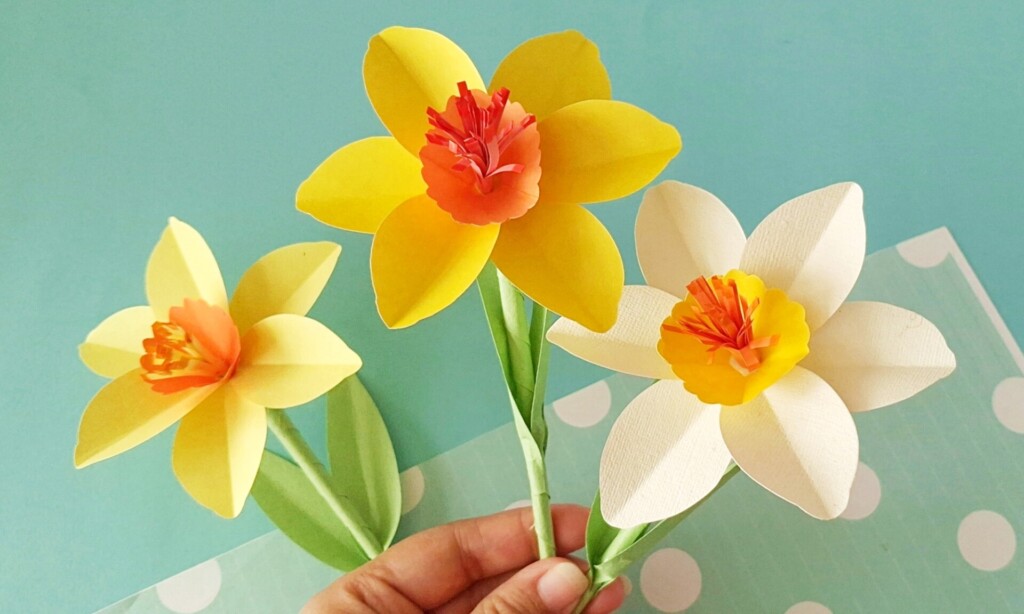
If you want a spring flower project that looks cheerful without taking all afternoon, these paper daffodils are a good place to start. You can make one with craft paper, a few basic tools, and the printable template from the shop.
This tutorial shows you how to build the layered petals, shape the trumpet center, and finish a paper daffodil in about 20 minutes. If this is your first paper flower, start with one flower before making a full bouquet.
Project Specifications
Difficulty Level: Beginner-friendly (the folds are simple, just take your time with the corona)
Cost: Under $2
Time: About 20 minutes per flower
Perfect For: Spring décor, handmade bouquets, greeting card embellishments, gift wrap accents
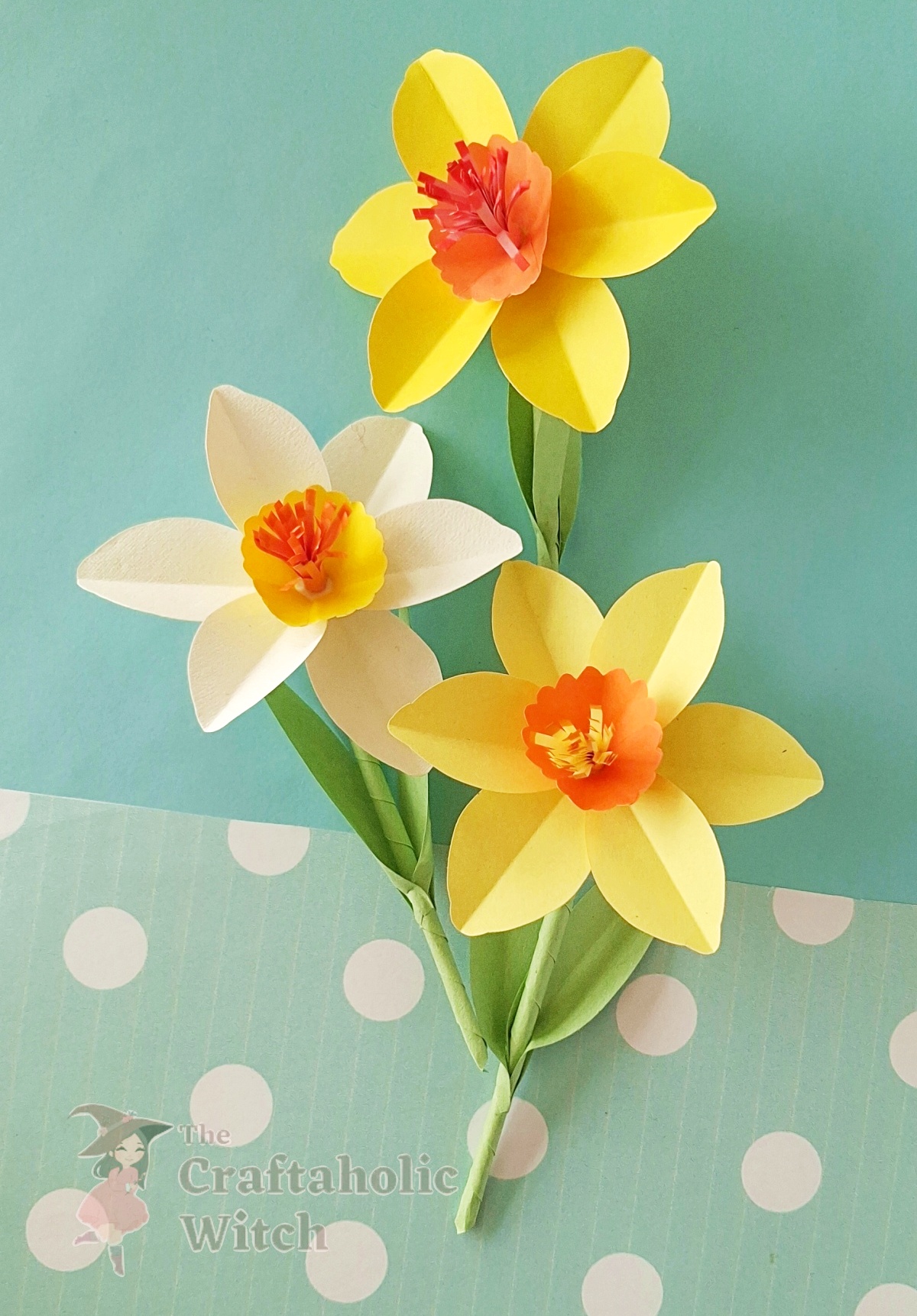
How to Make Daffodils from Colored Craft Papers
Things You’ll Need
Materials
- Colored craft paper (yellow or white for petals, orange or yellow for the corona, green for stem and leaves)
- Pencil
- Craft glue
- Template (get the template from our shop)
Tools
- A pair of scissors
- Quilling tool (optional, makes rolling the stigma and stem tighter and easier)
Please note that the provided links may include affiliate links, which means that if you make a purchase through them, we may earn a small commission.
Video Walkthrough
Watch the full build first to see how the pieces come together, then follow the steps below.
Ask inside "Crafty Q&A" while you are making.
"Crafty Q&A" is free to join. Share your question, photo, or the exact step where you got stuck, and chat with other makers plus the Craftaholic Witch team. You can also join any discussion thread already happening inside the space.
Step by Step Instructions for Paper Daffodil Flower Making
Step 1: Trace and Cut All Template Pieces
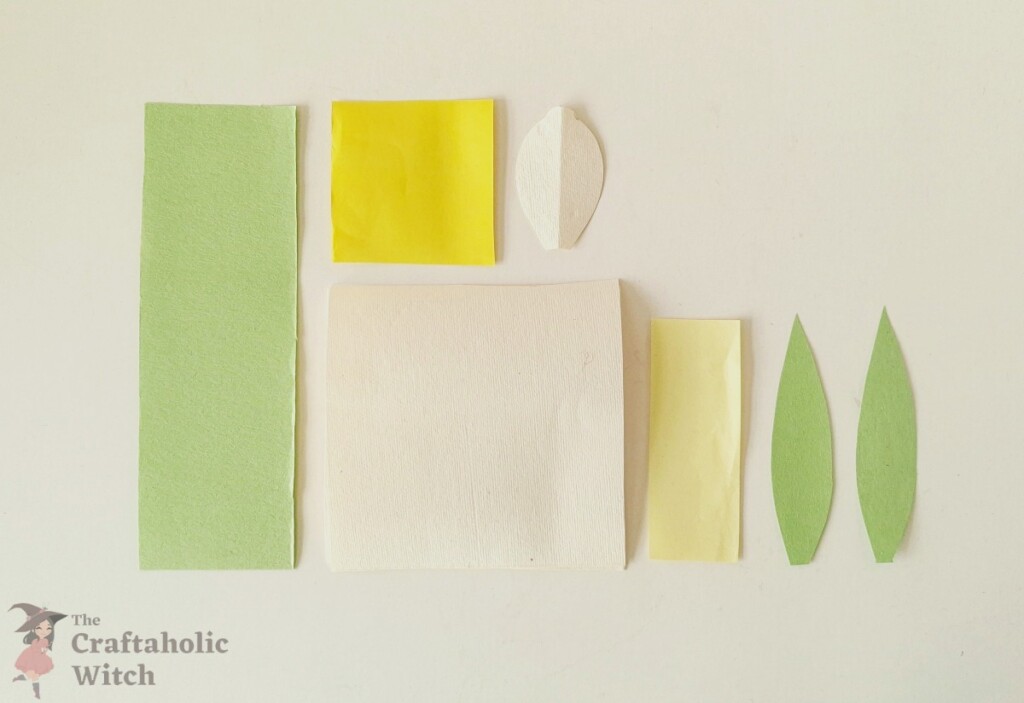
Pick your colored craft papers for each part of the flower. Print the template, place each pattern piece on the matching paper, trace it with a pencil, and cut everything out.
You’ll have two large petal shapes, one fringe strip, one small square, a few leaf cutouts, and a green stem strip. Getting everything cut before you start assembling keeps things simple as you go.
Step 2: Fold the Large Square Diagonally
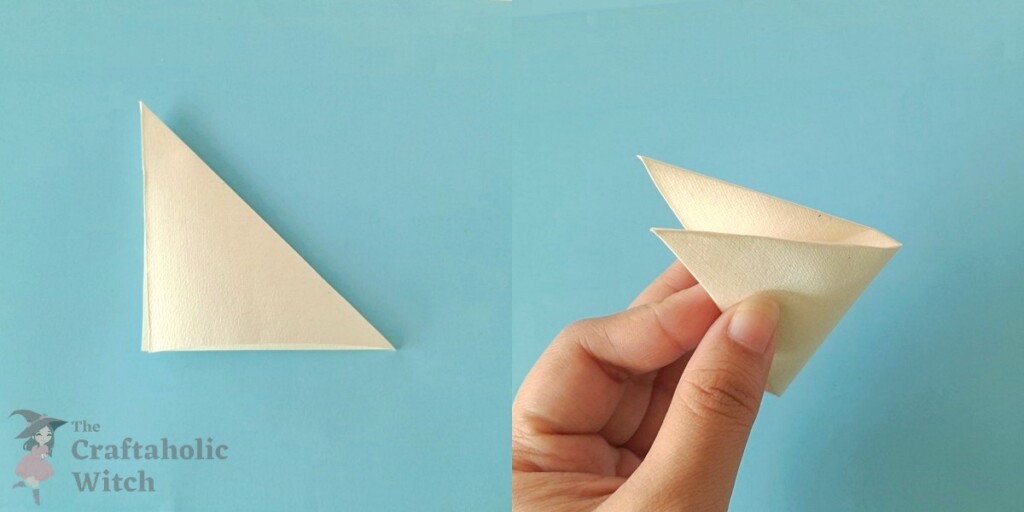
Take the large square sheet and fold it in half diagonally to make a triangle. Then lightly fold the closed edge one more time to mark the midpoint. Don’t press this second fold hard. It’s just a placement guide for the next step.
Step 3: Fold One Corner Inward to Start the Petal Shape
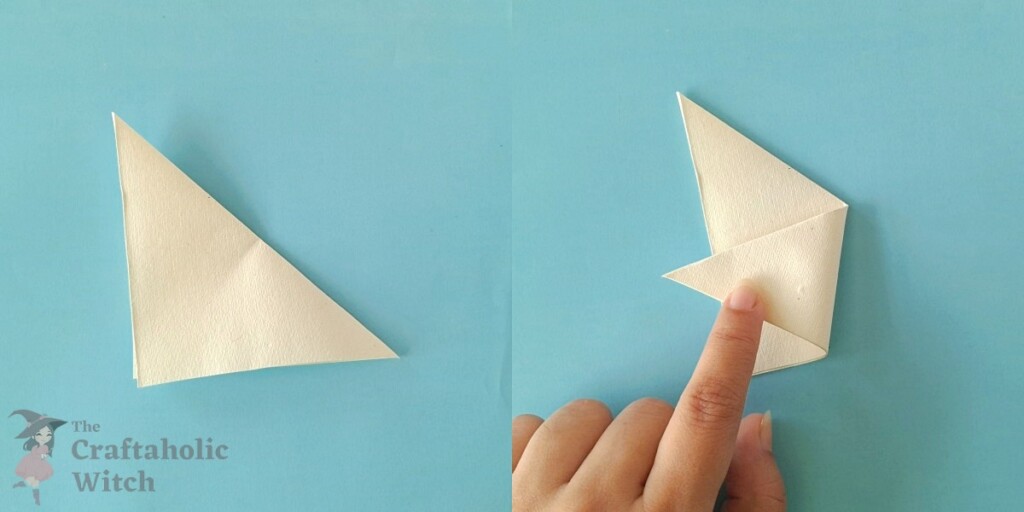
Unfold that last light fold. Take one corner of the triangle and fold it inward about one-third of the way. The paper should now look like a narrow wedge. This fold is what gives you even, symmetrical petals when you cut and open the piece, so keep it clean.
Step 4: Trace and Cut the Petal Shape
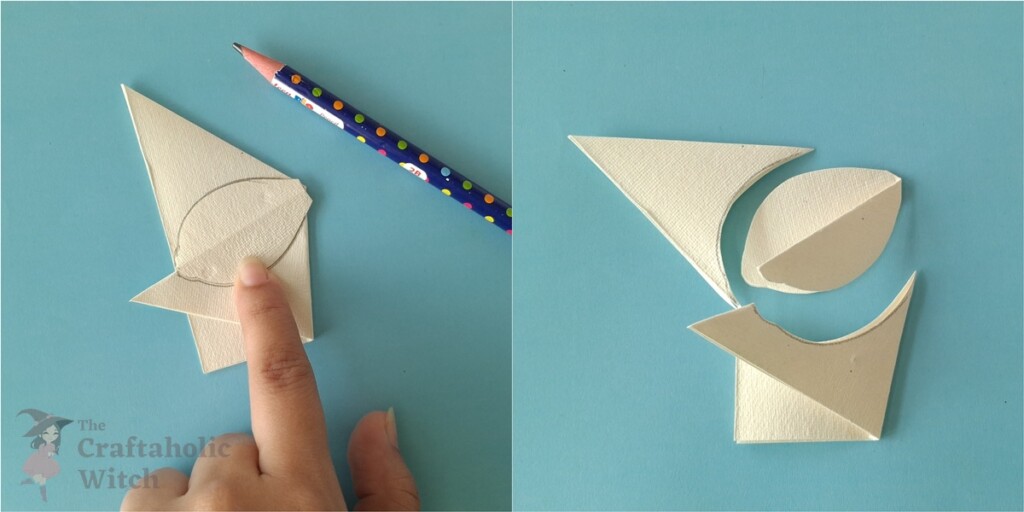
Place the petal template on the folded paper and trace around it with your pencil. Cut along the traced lines. The smoother your cut, the cleaner the petals will look once the piece is unfolded.
Step 5: Unfold to Reveal the Six-Petal Shape
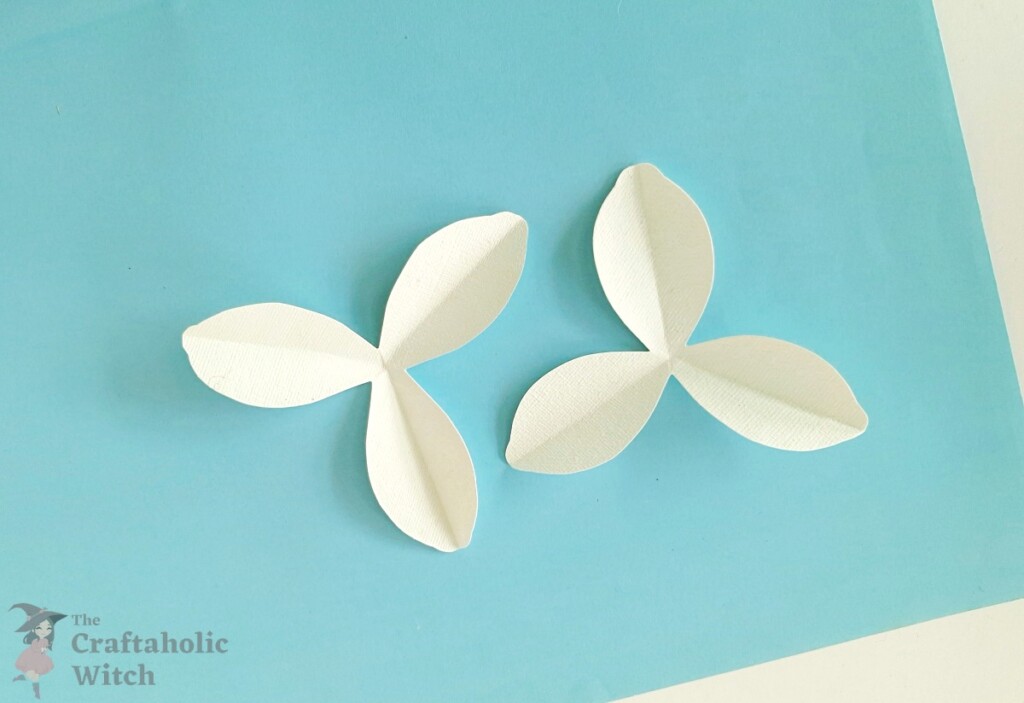
Open the paper fully to reveal a six-petal flower shape. Set this aside and repeat steps 2 through 5 with your second large square to make the second petal layer. Two layers give the finished flower its fullness.
Note: If the petals don’t come out even, check that your first diagonal fold was straight. A slightly off fold will show up once you open the shape.
Step 6: Cut Thin Fringes Along the Strip
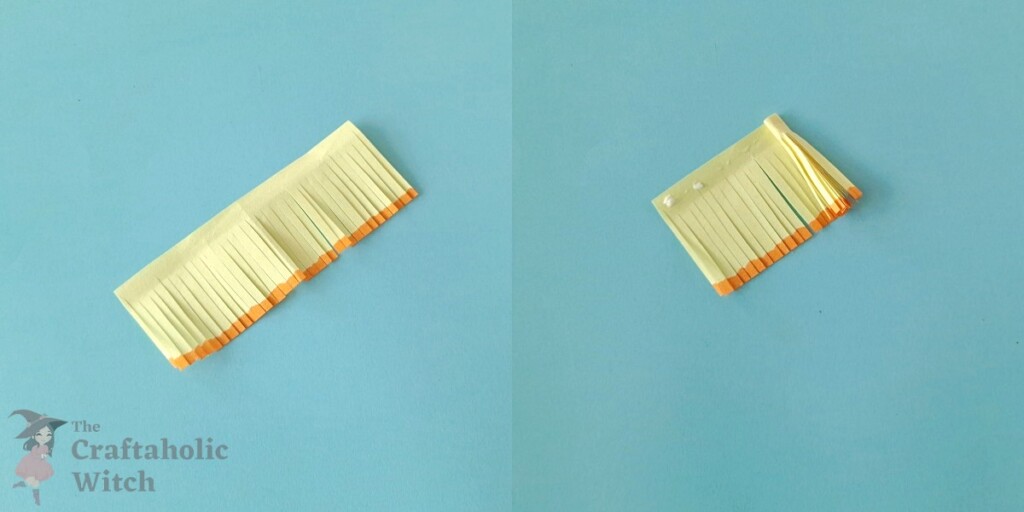
Take the small orange or yellow strip and cut thin, even fringes along one side. Keep the cuts close together and stop before you reach the bottom edge, leaving a clean strip of paper intact along the base. Run a darker marker along the fringe tips to give the flower center more definition.
Step 7: Coil the Fringe Strip into the Stigma
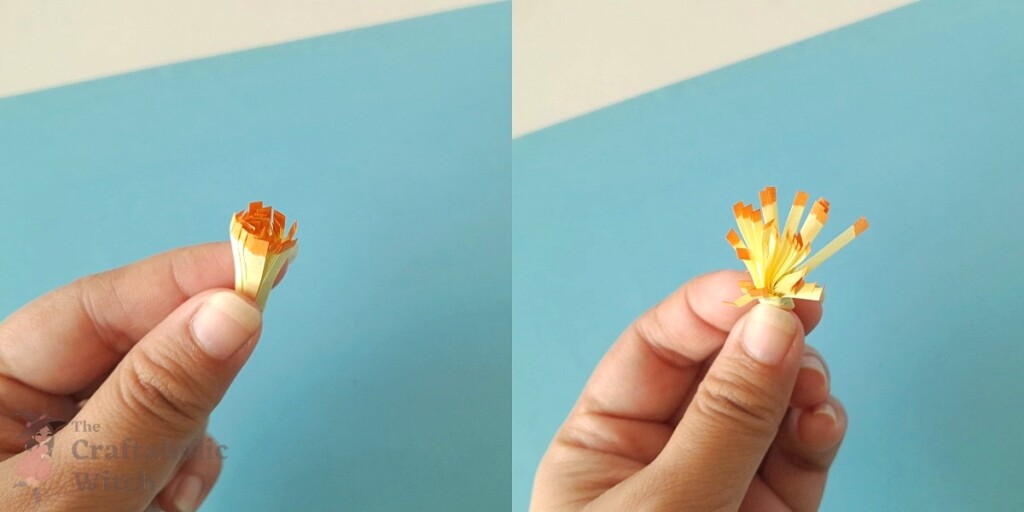
Apply a thin line of glue along the intact bottom edge of the fringe strip and roll it up tightly from one end. Once it’s fully coiled, gently spread the fringes outward with your fingers to open up the center.
This is where most people use too much glue. A thin line along the edge is all you need. Too much glue makes the coil stiff and the fringes won’t spread.
Step 8: Fold the Small Square into Layers
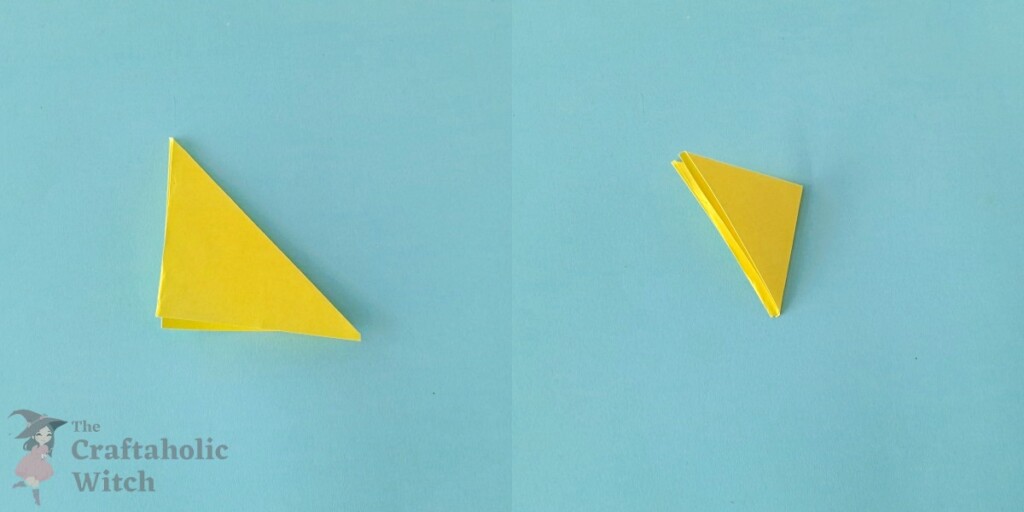
Take the small square and fold it in half diagonally, then fold it in half again. You should end up with a small triangular layered shape. Keep both folds crisp and even.
Step 9: Continue Folding to a Compact Wedge
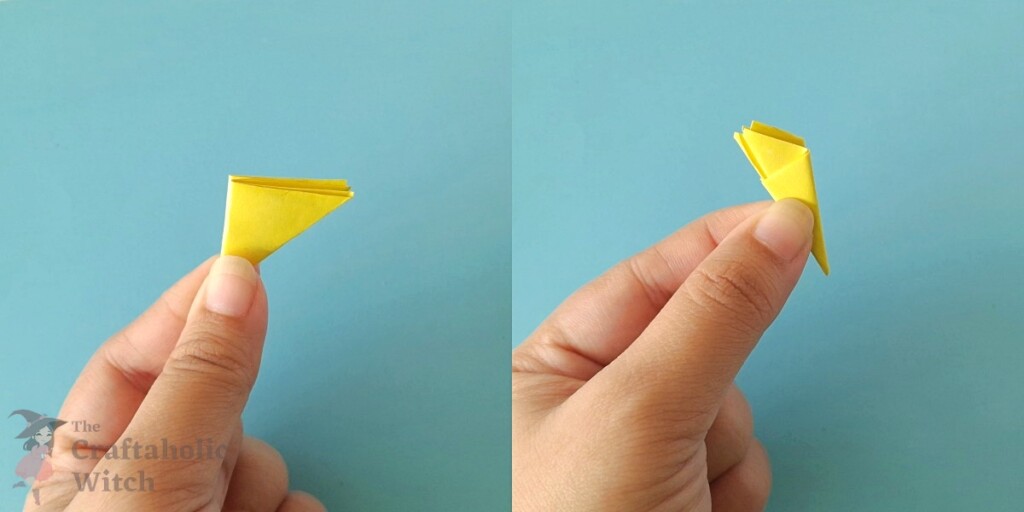
Fold the small triangle in half two more times until you have a very compact, thick wedge. The tighter and more even these folds are, the more uniform your scalloped edge will be when you cut it.
Step 10: Trim the Tip and Draw the Scalloped Border
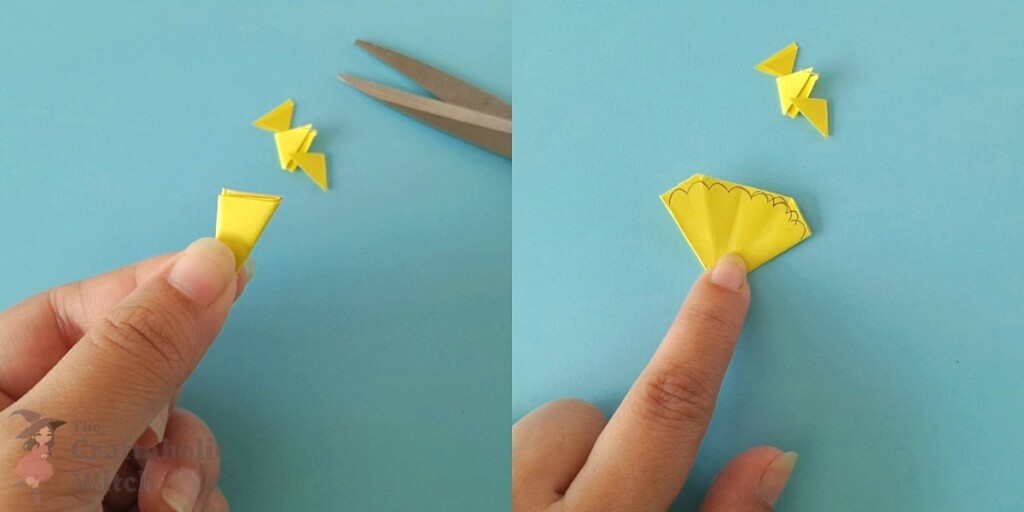
After the final fold, trim off any excess paper from the narrow tip to make it clean. Unfold only the last two folds, then draw a scalloped curved border along the open edge. This becomes the decorative top edge of the corona.
Step 11: Cut Out the Corona Piece
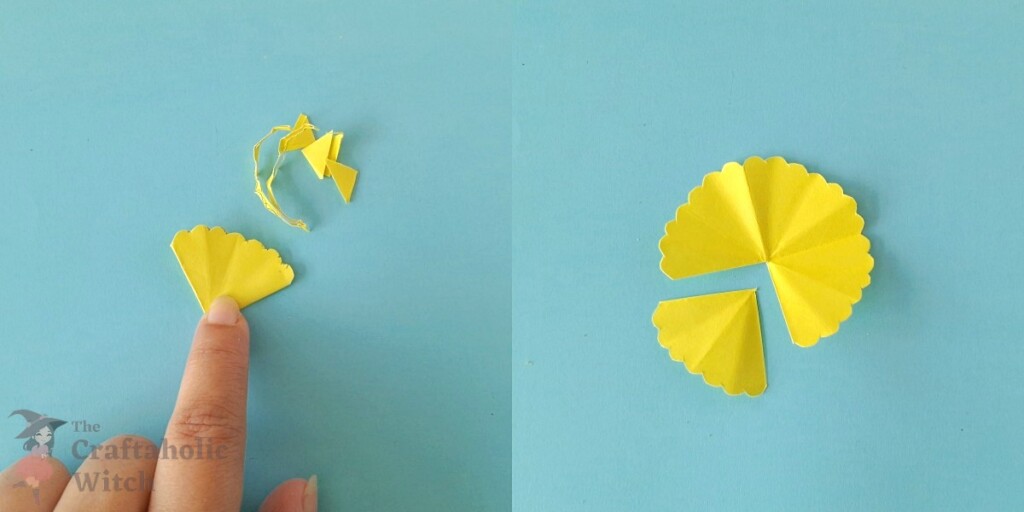
Cut along the scalloped border you drew. Unfold the paper completely to see a full circle with a scalloped edge. Cut out one quarter section of that circle. This smaller wedge-shaped piece is what you’ll roll into the cup.
Step 12: Roll and Glue the Corona
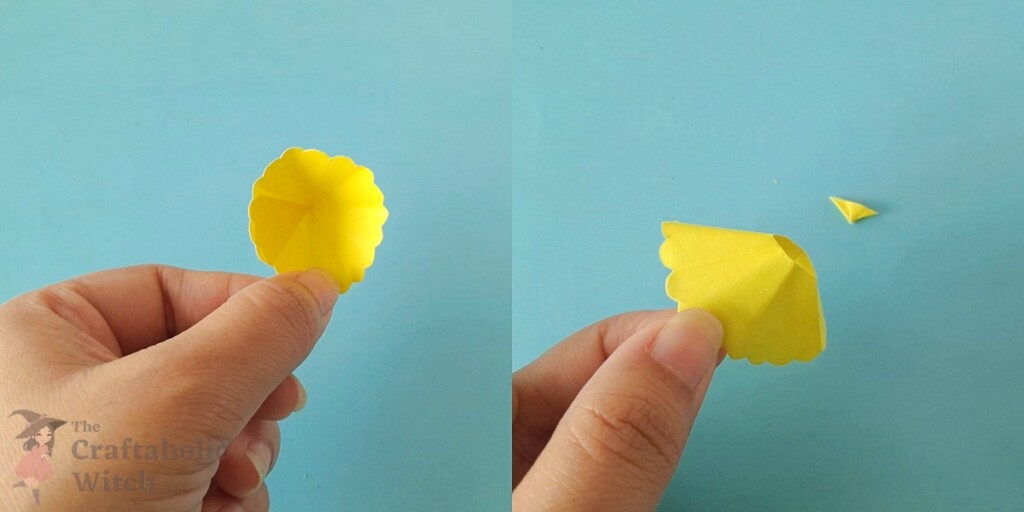
Bring the two straight edges of the wedge together and roll the piece into a cone shape. Apply glue along one straight edge and press the two sides together firmly. Once the cone holds, trim the very tip to create a small flat opening at the bottom.
We use a similar rolling technique in our DIY paper hyacinth flowers if you want to try another flower that uses this method
Step 13: Coil the Green Strip into a Stem
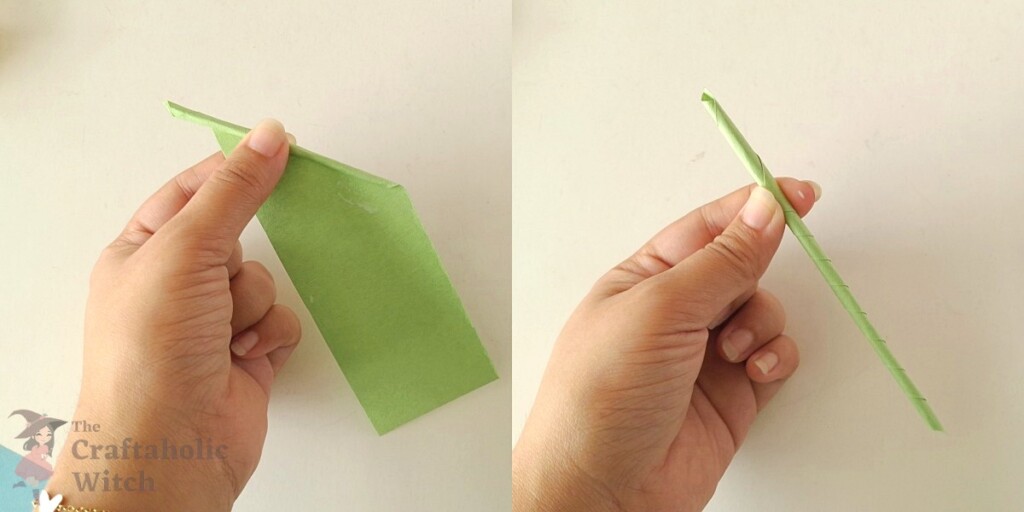
Take the green strip and roll it diagonally starting from one corner. Keep the roll tight as you go, then secure the end with a small dot of glue. You’ll have a firm paper stem ready to attach.
Step 14: Stack and Glue the Two Petal Layers
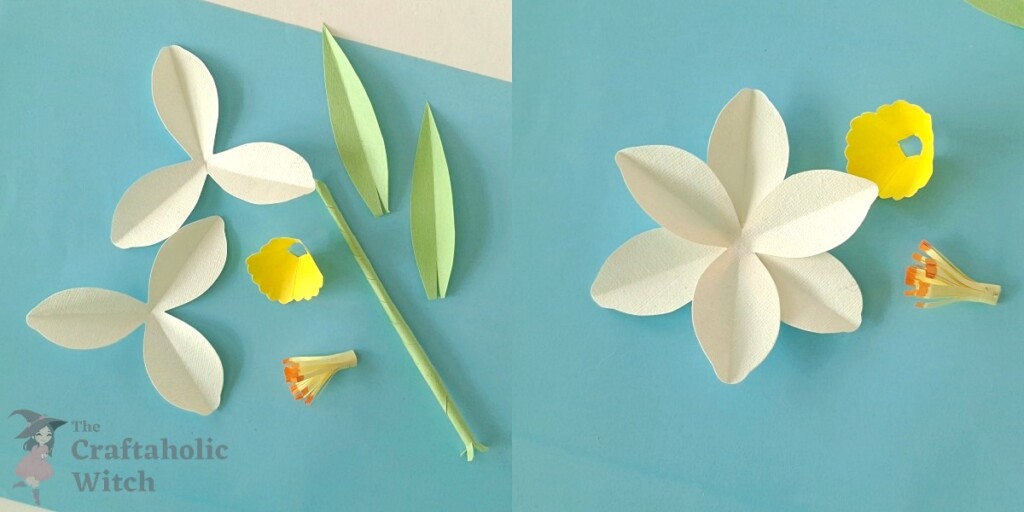
Take both six-petal cutouts and stack them on top of each other. Rotate the top piece slightly so its petals sit between the petals of the bottom layer. Apply glue to the center and press them together. This offset layering is what makes the flower look full and round from the front.
Step 15: Attach the Corona and Stigma
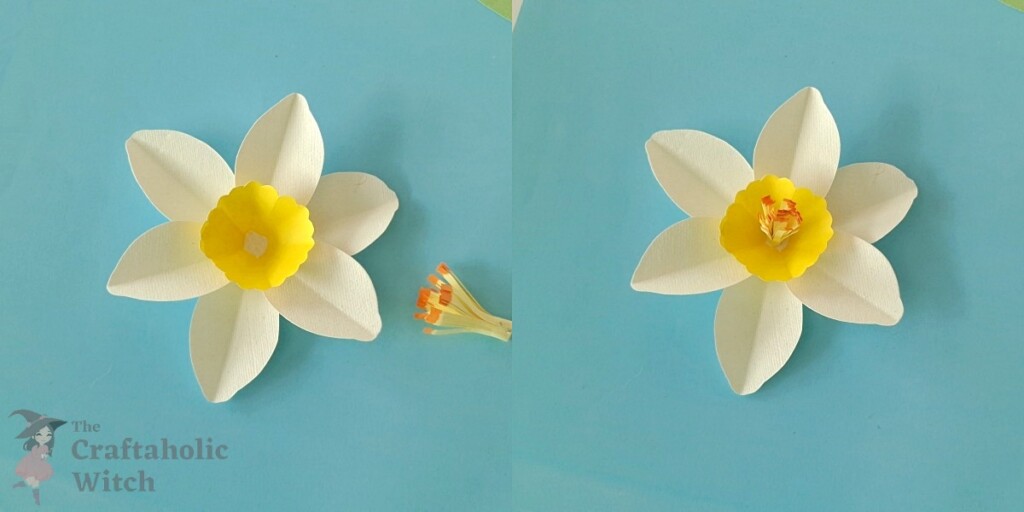
Apply glue to the flat base of the cone-shaped corona and press it onto the center of the layered petals. Tuck the coiled stigma down into the opening of the corona and glue it in place. Let everything dry for about a minute before moving on.
If you enjoy this kind of multi-part assembly, our paper tulips tutorial builds the same way and pairs nicely with these daffodils in a bouquet.
Step 16: Attach the Stem to the Back of the Flower
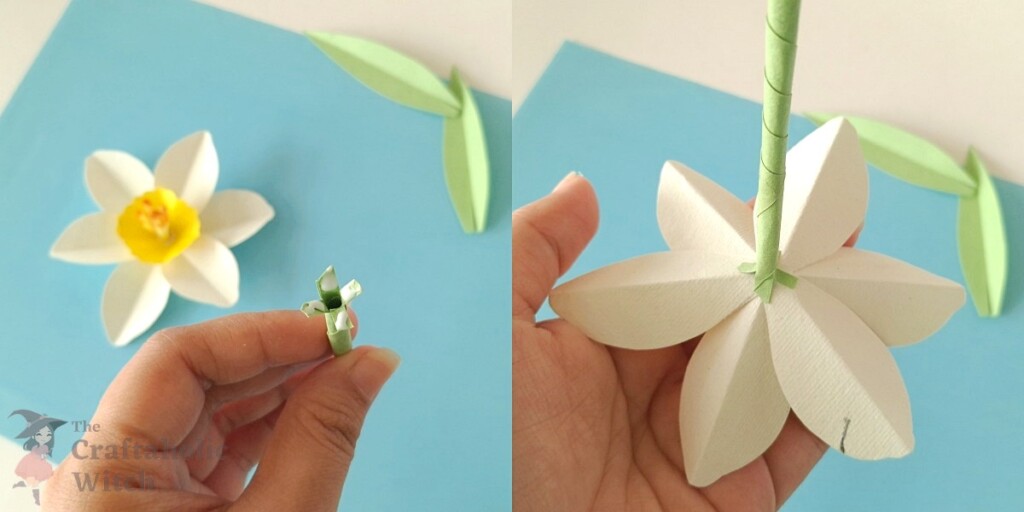
Make four short cuts on one end of the stem and fan the cut pieces outward to create small gluing tabs. Apply glue to these tabs and press them firmly against the back center of the flower. Hold it for about 30 seconds so the glue sets properly before you let go.
Step 17: Glue the Leaves onto the Stem
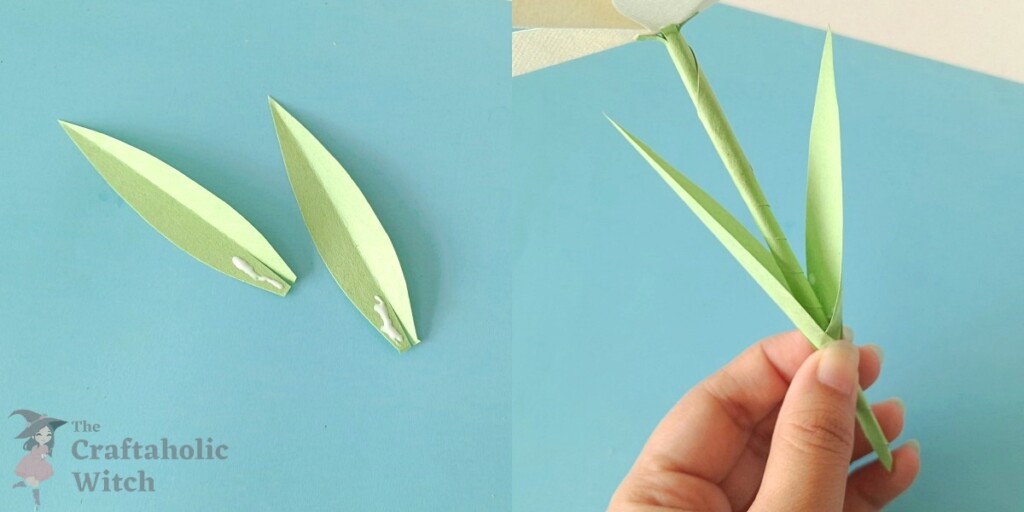
Press a light crease down the center of each leaf cutout, just enough to mark a line without folding all the way through. Apply glue along the crease and press each leaf against the stem at slightly different heights. Staggering them makes the whole flower look more natural.
Step 18: Bend the Stem and Shape the Flower
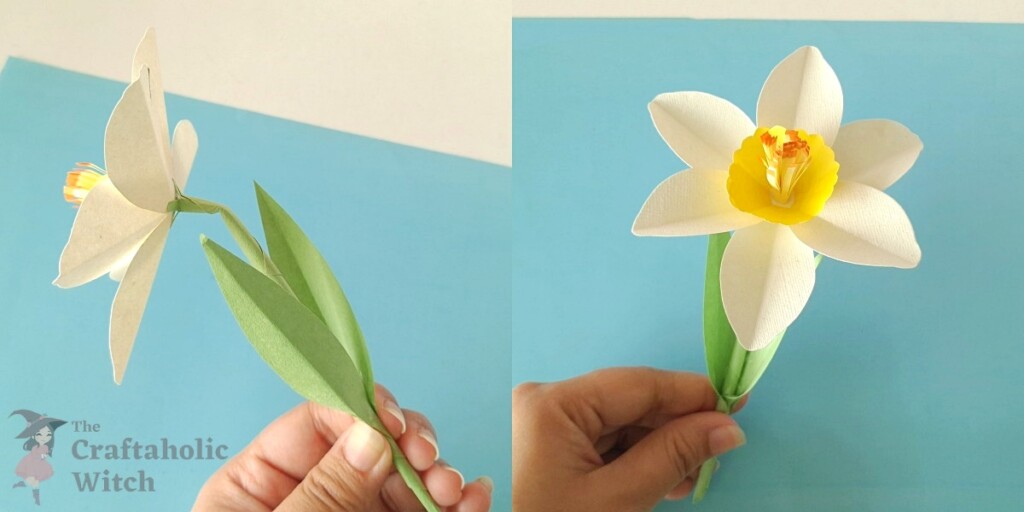
Gently bend the stem at a 90-degree angle just below where the flower head connects. Then curve each petal tip downward and outward with your fingers. Your paper daffodil is done.
Share it in "I Made It" and let us cheer you on.
Post your finished make in "I Made It" so the community can celebrate it with you. Cheer on other makers too. Each month, the most loved craft wins 1 year of Craftaholic Premium ($59)
Join Craft Challenge: Craft Your Calm
Make something that brings you a sense of peace, share a photo, and tell us your story. It's free to enter, open to everyone, and the entry with the most reactions takes home a $100 gift card. Takes five minutes to join.
Entries close August 30, 2026. No purchase necessary.
What to Do with Your Paper Daffodils
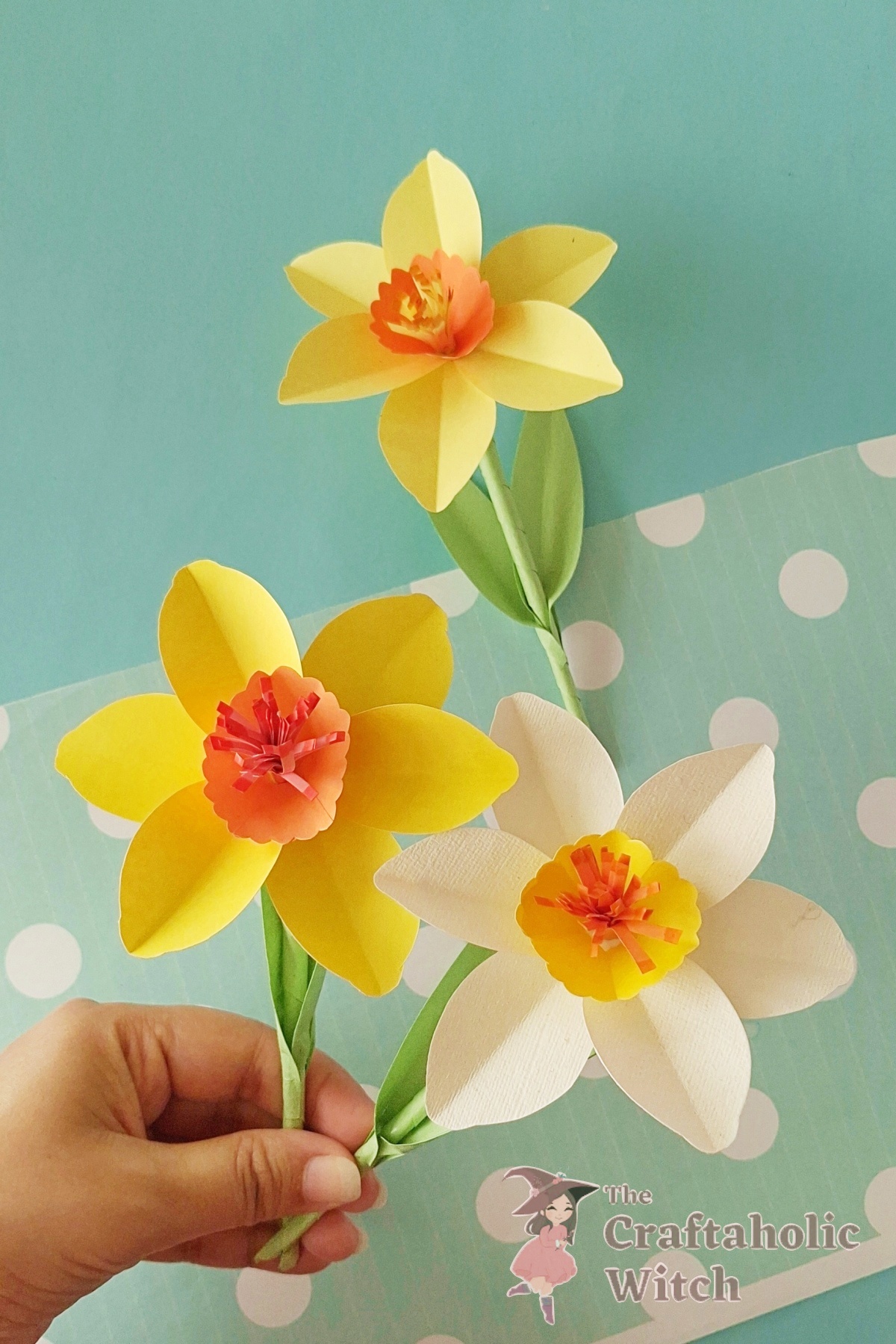
The finished flower looks great displayed in a small vase or bundled with a few others into a spring bouquet. We’ve made these in solid yellow, white with an orange corona, and soft cream with a peach center, and all three together make a really convincing arrangement. They also work well tucked into gift wrapping or glued onto the front of a handmade card.
Browse the full paper flowers collection to find more flowers that pair nicely with these in a bouquet. For a completely different spring craft, our origami lotus flower is a beautiful fold that’s very approachable for beginners.
Tips for Beginners to Craft Daffodils from Craft Papers
Paper flowers are always a joy to make, and these daffodils are a perfect beginner-friendly project! With a few folds, cuts, and simple shaping techniques, you can create a beautiful spring flower in no time. If you’re new to paper crafting, these tips will help you get neat and lovely results.
- Use lightweight craft paper. It’s easier to fold, cut, and shape, especially for the petal and cone parts.
- Trace patterns carefully. Neat tracing will help you achieve clean and even petal shapes.
- Cut slowly and precisely. Smooth edges make a big difference in how polished your flower looks.
- Make sharp but gentle folds. Crisp folds help with shaping, but avoid pressing too hard to prevent tearing.
- Follow the fold guides closely. Accurate folding is key to getting symmetrical petals.
- Cut fringes evenly. Try to keep the fringe cuts thin and consistent for a neat flower center.
- Coil tightly but gently. While making the stigma and stem, keep the coil firm but not too tight to avoid wrinkles.
- Use minimal glue. A small amount of glue is enough and helps avoid messy edges.
- Allow the glue to dry before assembling the next parts. This keeps the structure stable and easier to handle.
- Shape the flower softly. Gently adjust the petals and bend the stem for a more natural look.
- Practice once if needed. If it’s your first time, try one practice piece to get comfortable with the folds and cuts.
With these simple tips, you’ll be able to create bright and cheerful paper daffodils that are perfect for spring décor, bouquets, or handmade gifts!
FAQ’s
Can I use regular printer paper instead of craft paper?
You can, but craft paper holds up better through the folding and cutting. Printer paper is thinner and tears more easily at the folds. If that’s all you have, use a lighter touch and avoid pressing the creases too firmly.
Do I need the template, or can I draw the shapes freehand?
The template makes it much easier to get clean, symmetrical petals and a properly sized corona. Freehanding is possible, but the template takes the guesswork out of sizing so all the pieces fit together properly.
How do I make the petals look more realistic?
fter assembly, use a pencil or skewer to gently curl each petal tip upward. Rolling the petal edge over the pencil gives it a natural curve instead of lying flat. You can also press a light crease down the center of each petal for a bit more detail.
Can I bundle multiple daffodils into a bouquet?
Yes, and it looks great. Make 5 to 7 flowers and cut the stems to slightly different lengths before tying them together with a rubber band. Wrapping the bundle in green paper or twine finishes it off nicely. Yellow, white, and cream together make a really convincing spring bouquet.
If you enjoy making paper flowers, check out other adorable paper flower crafts on our blog for more spring-inspired creations!
We hope you had fun crafting these cheerful paper daffodils! 🌼 They’re perfect for brightening up your desk, table, or spring décor.
Stay tuned for more cute and easy paper flower tutorials! Don’t forget to share your creations with us – we love seeing your crafty blooms!
0 Comments
Join the conversation
Log in to your Craftaholic Community account to comment, ask questions, and cheer on fellow makers.
Log in to comment