
Spring is all about bright colors, fluttering butterflies, and fun creative projects! This tissue paper butterfly craft is a simple and delightful way to bring those cheerful vibes into your crafting time. With soft tissue papers and easy steps, you can create beautiful butterflies that look light and vibrant.
This craft is perfect for kids’ activities, classroom projects, home décor, or spring-themed crafts. Since it doesn’t require any template, you can jump right into the fun using just a few basic supplies. Plus, we’ve included a full video tutorial to guide you through the process step by step.
The best part is that this project is super quick, beginner-friendly, and budget-friendly. You can make a tissue paper butterfly in just 10–15 minutes using simple materials like tissue paper, pipe cleaners, and scissors. It’s a fun and creative craft that’s perfect for all ages!
Project Specifications
- Difficulty: Beginner-friendly (if you can fold paper, you’re all set)
Cost: Under $3
Time: 15 minutes per butterfly
Ages: 5 and up (pipe cleaner step works better with an adult nearby for kids under 7)
Perfect For: Spring and Easter decorating, classroom crafts, birthday garlands, gift toppers
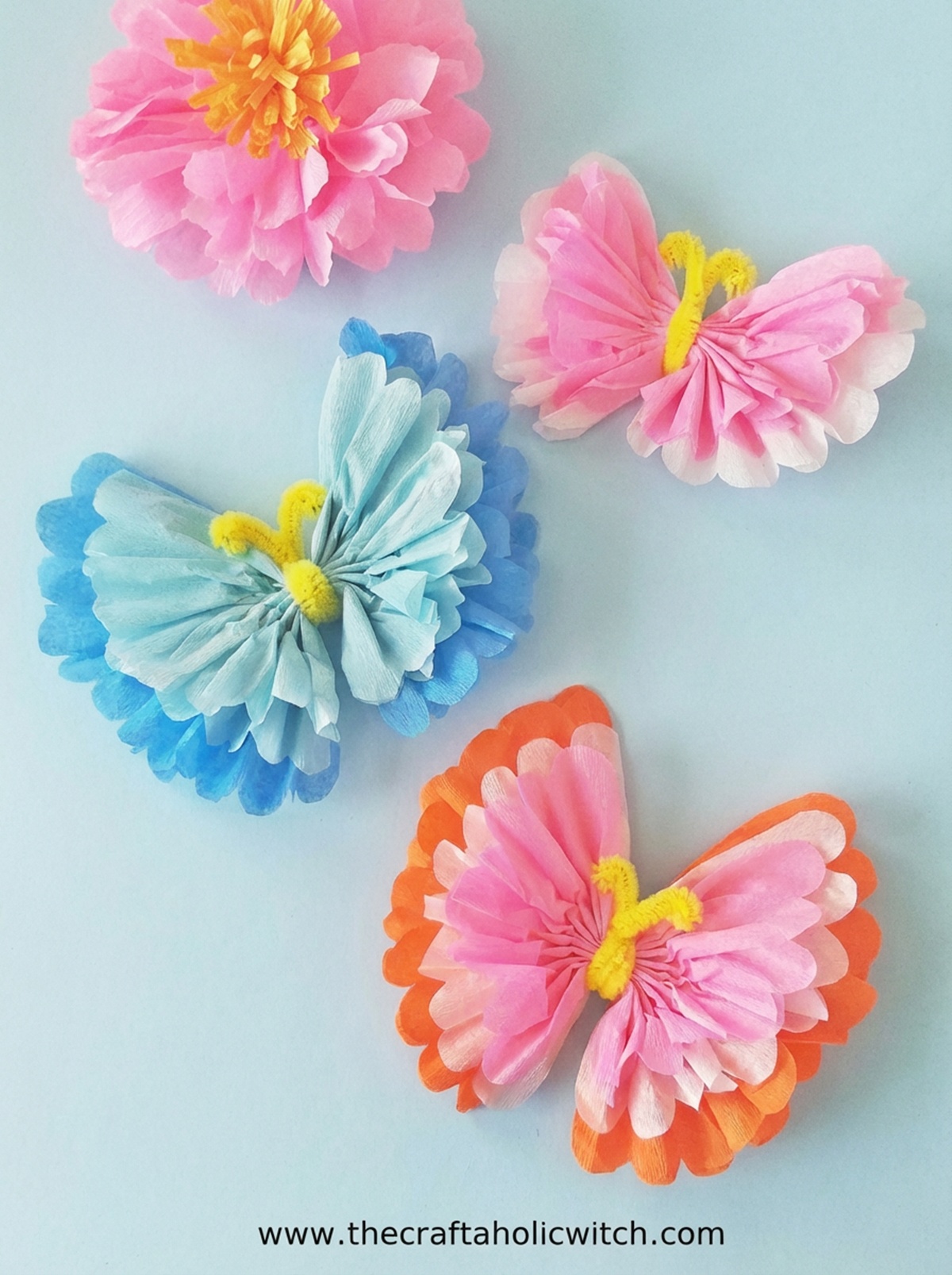
How to Make Butterfly from Craft Tissue Paper
Things You’ll Need
Materials
- Craft tissue paper, 3 sheets cut to the same length but slightly different widths (use at least 2 colors for a layered effect)
- Pipe cleaner, 1 (any color works; matching the tissue paper is a nice touch)
Tools
- A pair of scissors
- Ruler (optional, helps keep your cuts consistent)
Please note that the provided links may include affiliate links, which means that if you make a purchase through them, we may earn a small commission.
Video Walkthrough
The video shows every fold in real-time so you can follow along at your own pace.
Step by Step Instructions
Step 1: Cut 3 Tissue Paper Pieces to Slightly Different Widths
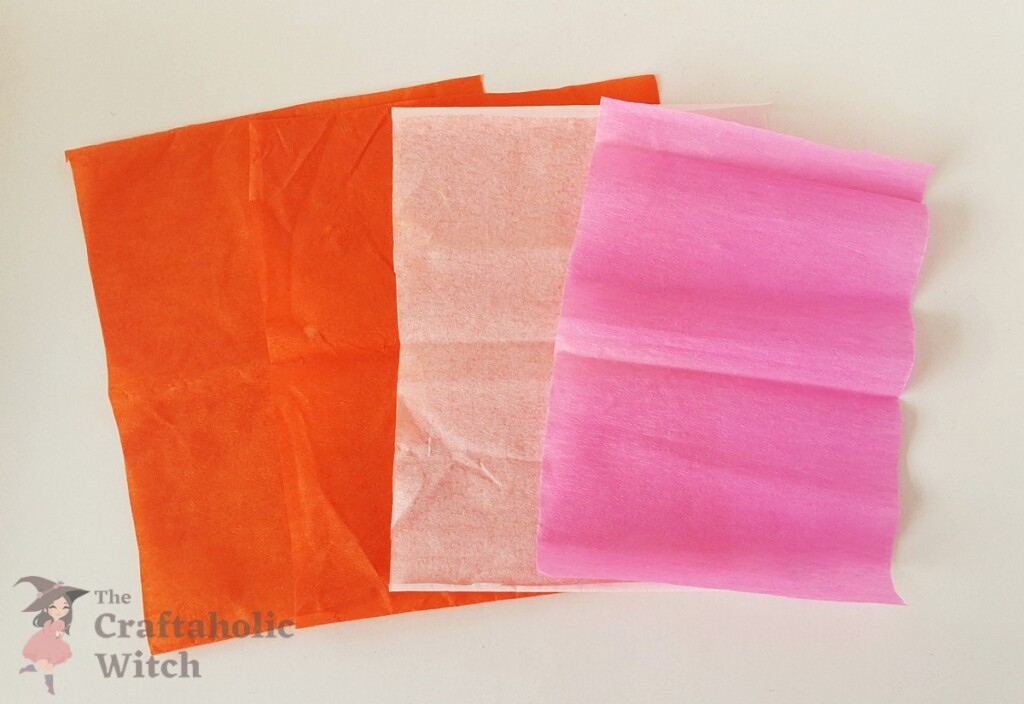
Cut three pieces of tissue paper to the same length, but make each one a little different in width. The widest piece goes on the bottom of the stack and the narrowest on top. Using two or more colors at this stage is what gives the finished wings their layered, multi-toned look.
Step 2: Take One Sheet and Lay It Flat
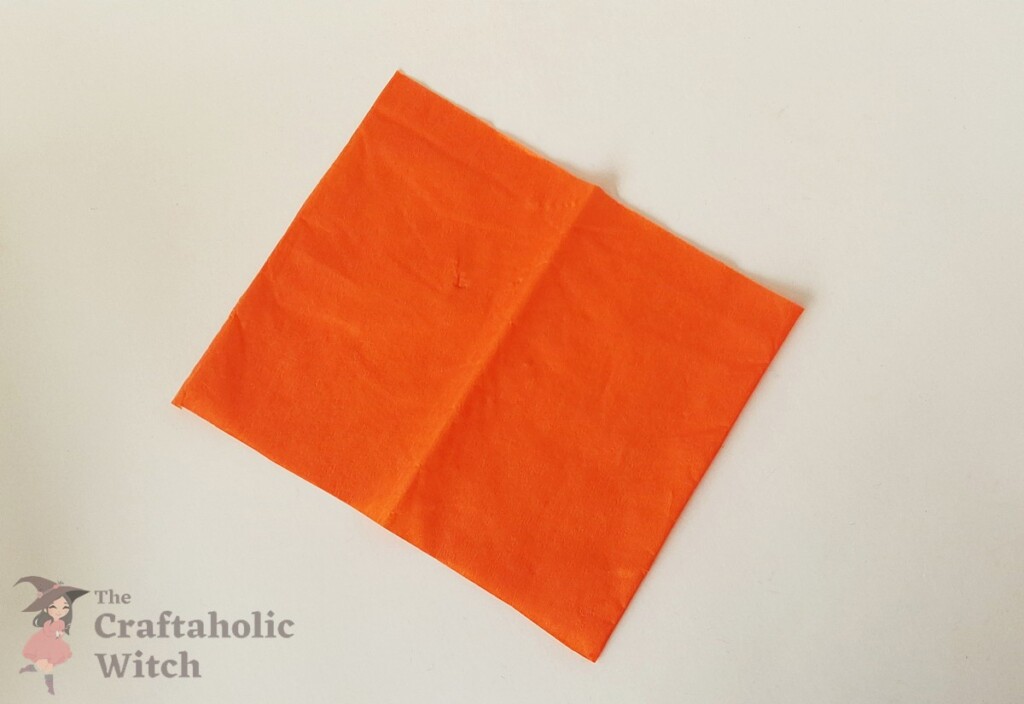
Pick up one of your prepared pieces and lay it on your work surface with the long side facing you. Working through the shaping steps on one sheet at a time is much easier than trying to handle all three at once.
Step 3: Fold the Sheet in Half Along the Long Side
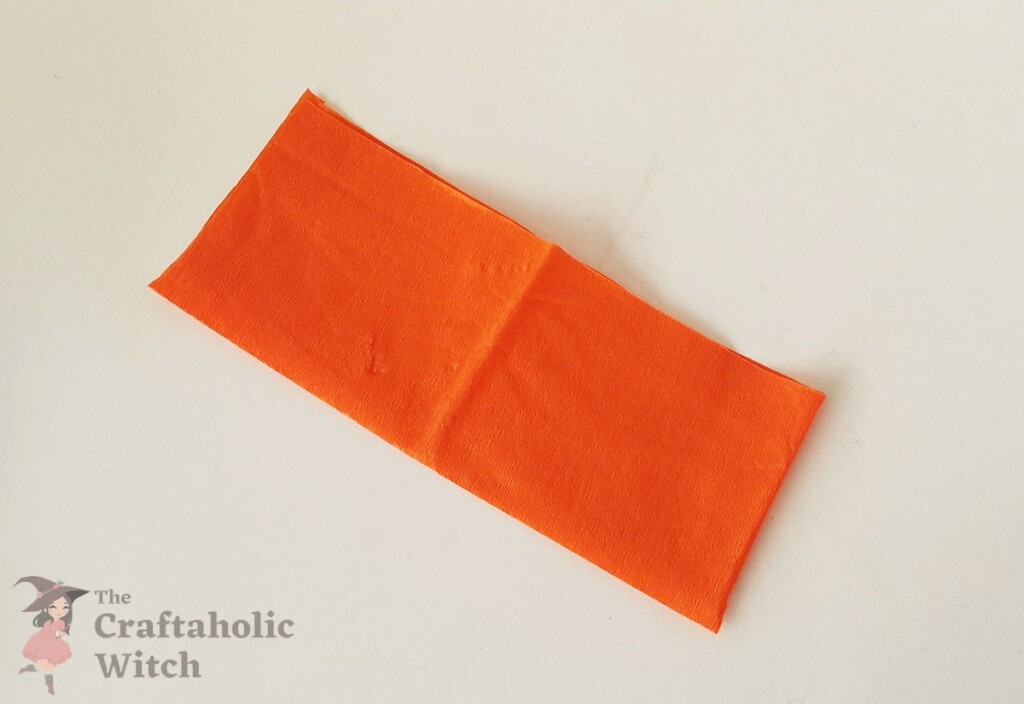
Fold the tissue paper in half along its longer edge. Crease it firmly with your finger or the flat edge of your ruler. This doubled layer holds its shape better when you start cutting the edges.
Step 4: Cut a Thin Diagonal Strip Along the Open Edges
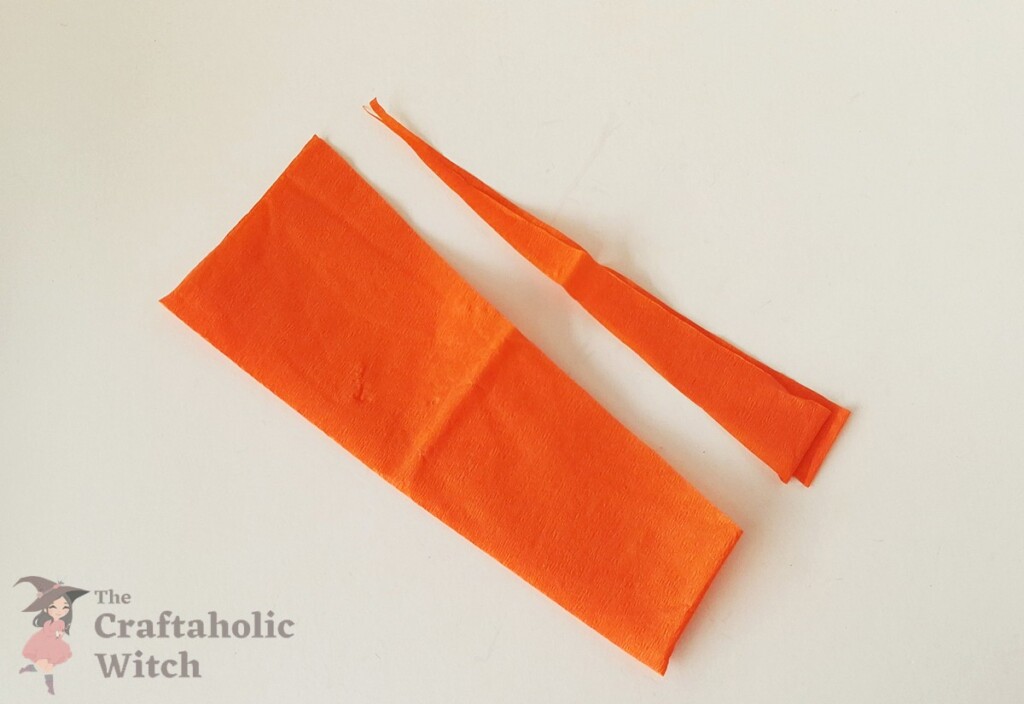
Cut a thin strip, about 1 cm wide, along the open (unfolded) edges at a slight diagonal. This diagonal cut creates the natural taper in the wing shape once the butterfly is opened. Don’t stress if the cut isn’t perfectly straight. The softness of tissue paper hides minor unevenness really well.
Step 5: Cut a Scalloped Border Along the Open Edges
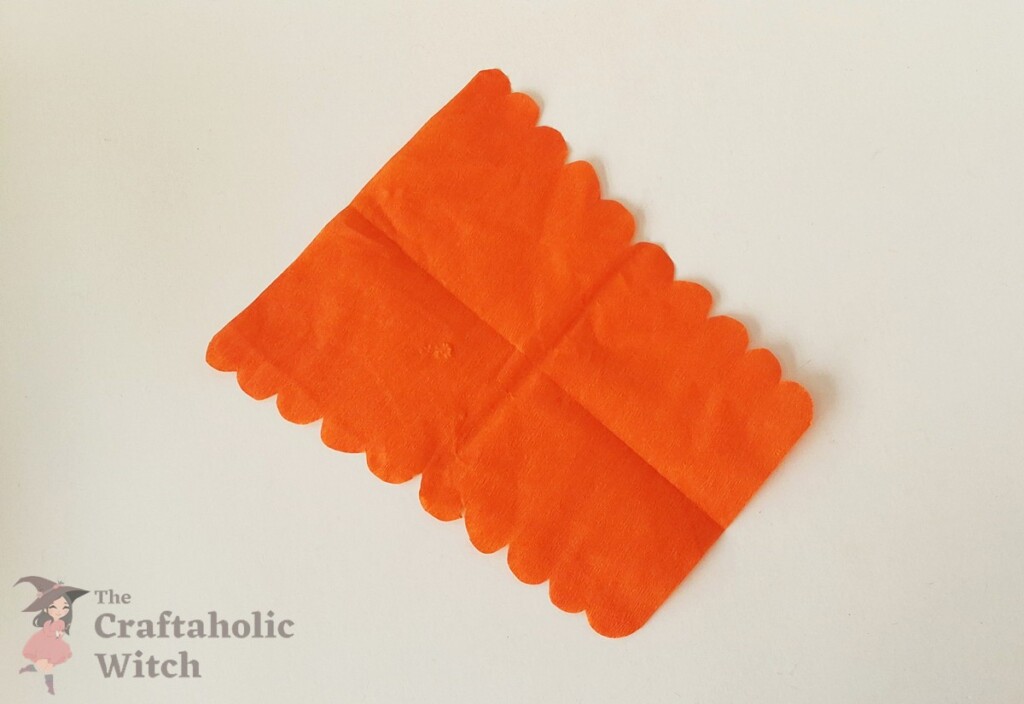
Cut small, rounded scallop shapes along those same open edges. These become the decorative wavy outline of each wing. Slower cuts give cleaner curves here, so take your time rather than rushing through it.
Troubleshooting: If your tissue paper is tearing instead of cutting cleanly, the scissors may be too dull for such a light material. Try a sharper pair or take smaller snips.
Step 6: Repeat the Fold and Cut Steps for the Remaining Two Sheets
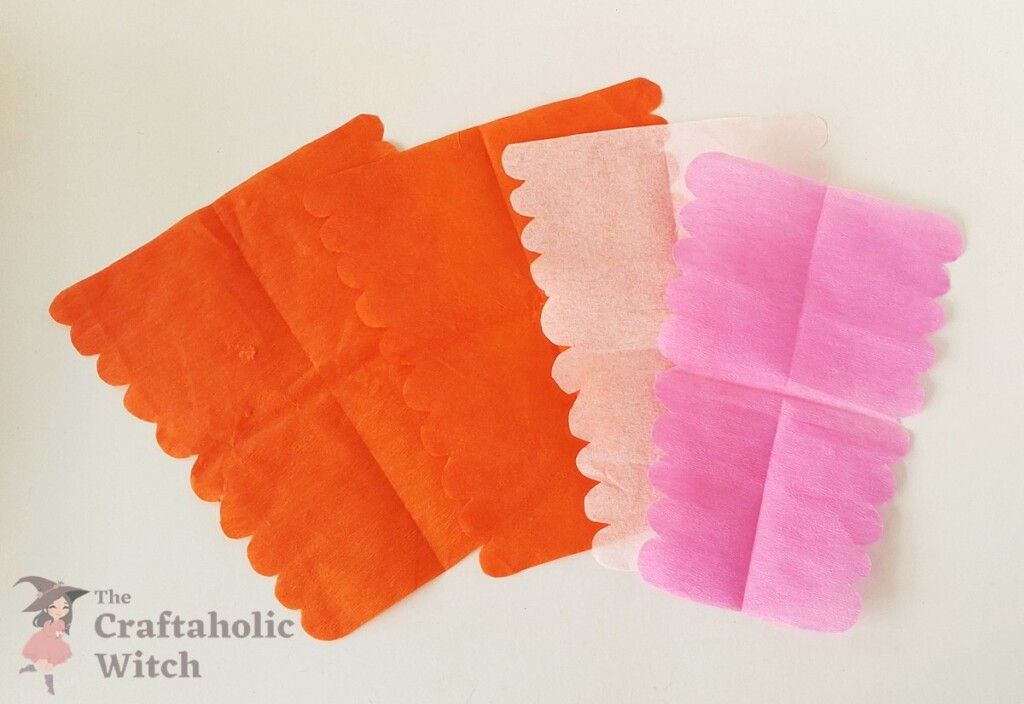
Go through the same fold, diagonal cut, and scallop process on each of the other two tissue paper pieces. Keeping the scalloped cuts roughly similar across all three sheets gives the wings a balanced look once everything is stacked together.
Step 7: Stack All Three Sheets with the Narrowest on Top
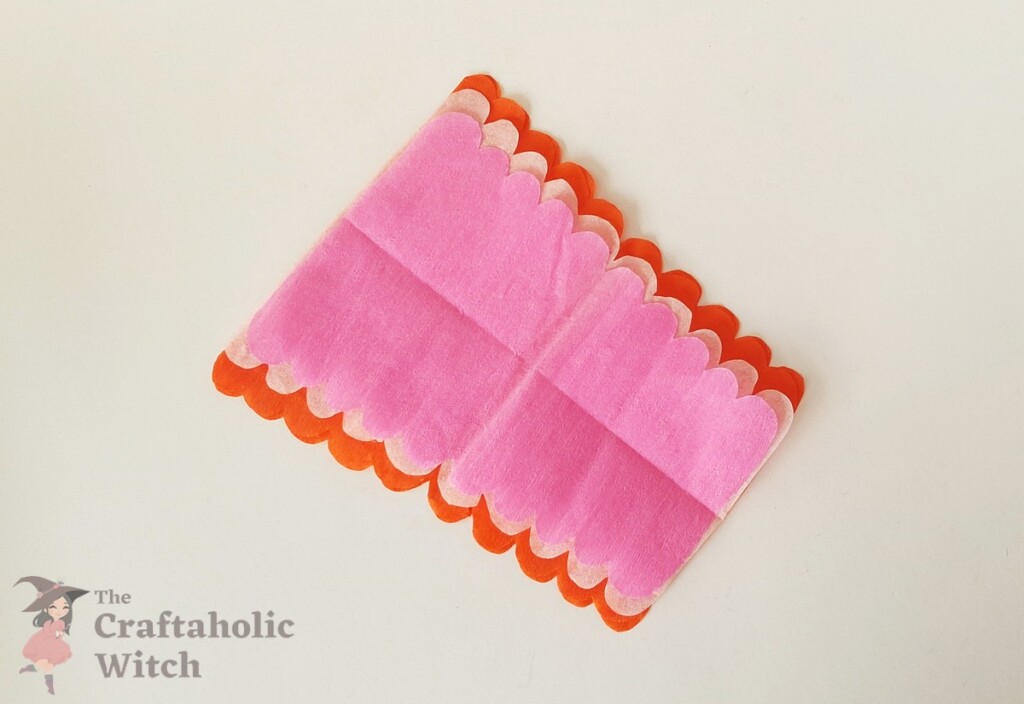
Lay all three prepared pieces on top of each other, widest on the bottom and narrowest on top. Align them at the center so the scalloped edges are roughly even on both sides. This layered stack is what gives the finished butterfly its dimensional, puffy wings. For a slightly different take on paper butterflies, our paper butterflies cut-out tutorial uses the same idea with a different cutting approach.
Step 8: Begin Accordion Folding Along the Width
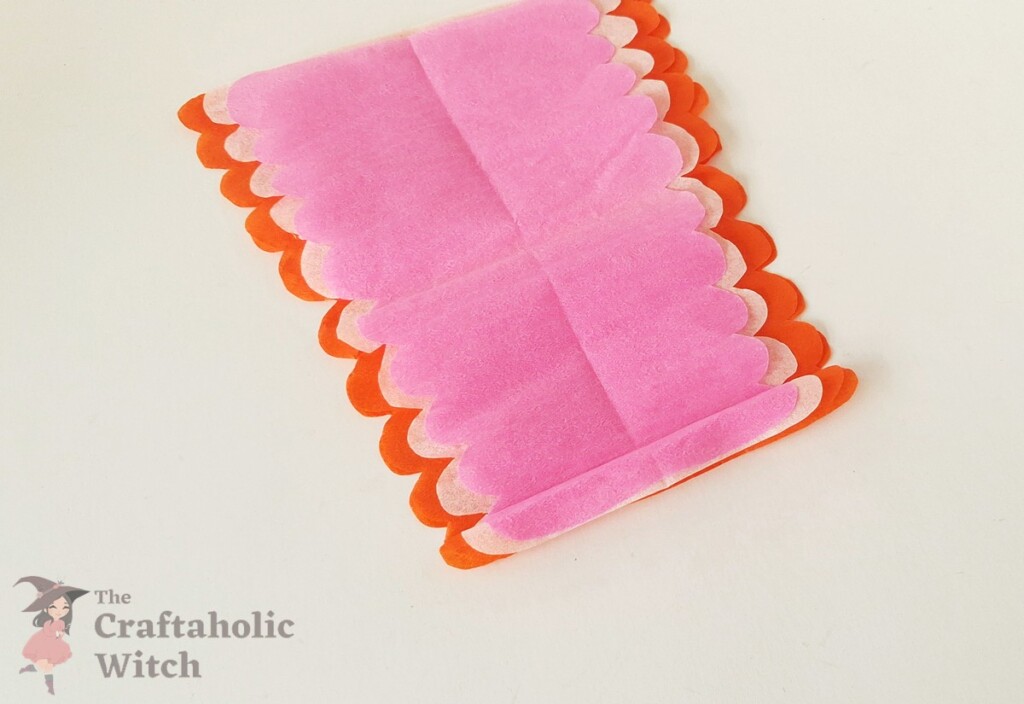
Hold all three layers together and fold back and forth along the width, working from one end to the other. Keep each fold roughly the same size. Press the layers together as you go so they stay aligned.
Troubleshooting: If the layers keep slipping while you fold, hold the stack lightly against your body or work surface to stop it from shifting. A little patience here makes the next steps much smoother.
Step 9: Use the Scalloped Border as Your Folding Guide
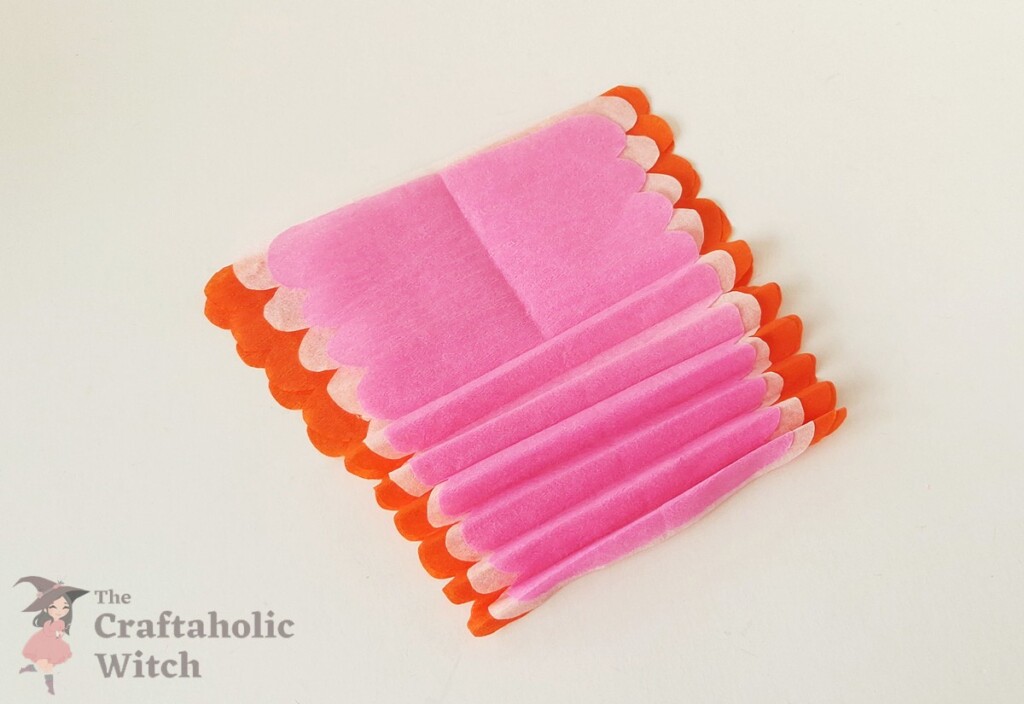
The scalloped edge you cut earlier doubles as a visual guide for keeping your accordion folds even. Line each fold up with the scallop pattern so the ridges stay consistent from one end to the other. Even folds make the wings look more symmetrical when you open them up.
Step 10: Pinch the Center and Tie It with the Pipe Cleaner
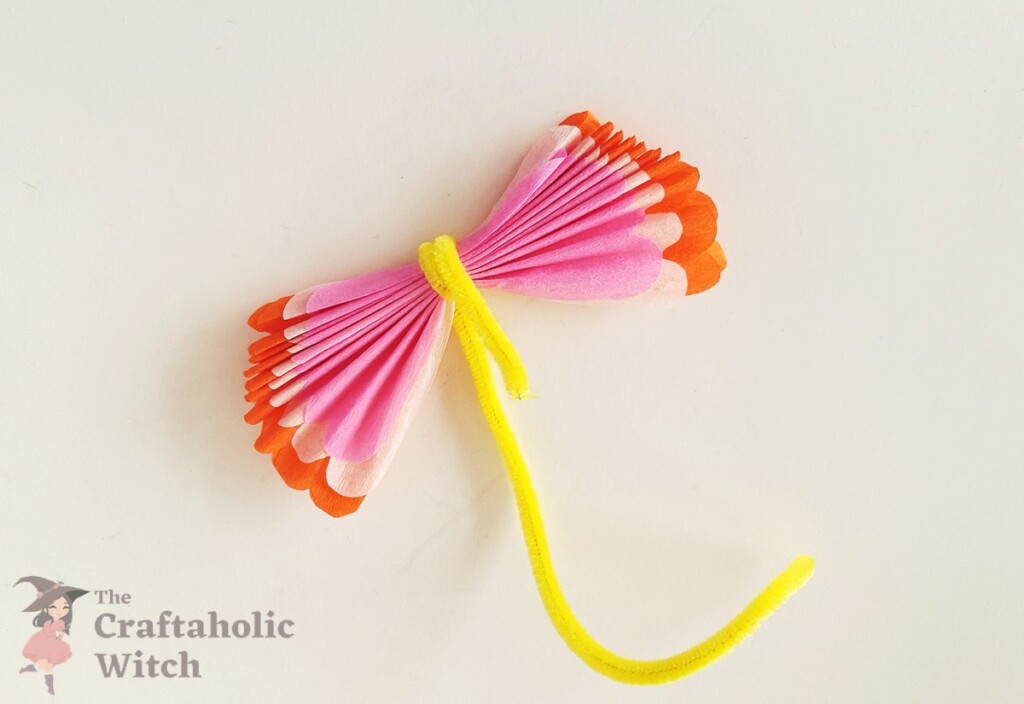
Once the whole stack is accordion-folded, pinch it at the center and wrap the pipe cleaner around it twice. Twist it snugly enough to hold the folds in place, but not so tight that it cuts through the tissue. The center should feel firm and stay in shape when you let go.
Step 11: Bring Both Pipe Cleaner Ends Toward the Top
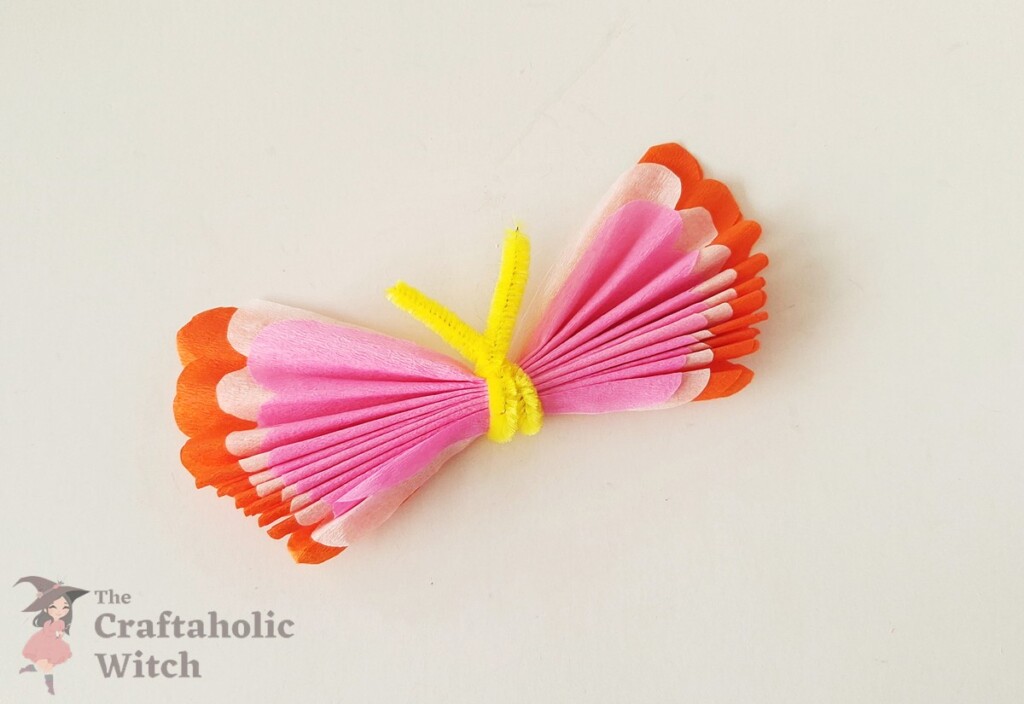
After securing the center, bring both ends of the pipe cleaner upward toward the wider end of the folded stack. Position them side by side, pointing slightly outward. This setup becomes the antennae in the next step. If you enjoy accordion-fold projects, our 3D paper hearts tutorial uses the same basic folding technique with a completely different result.
Step 12: Curl the Pipe Cleaner Tips into Antennae
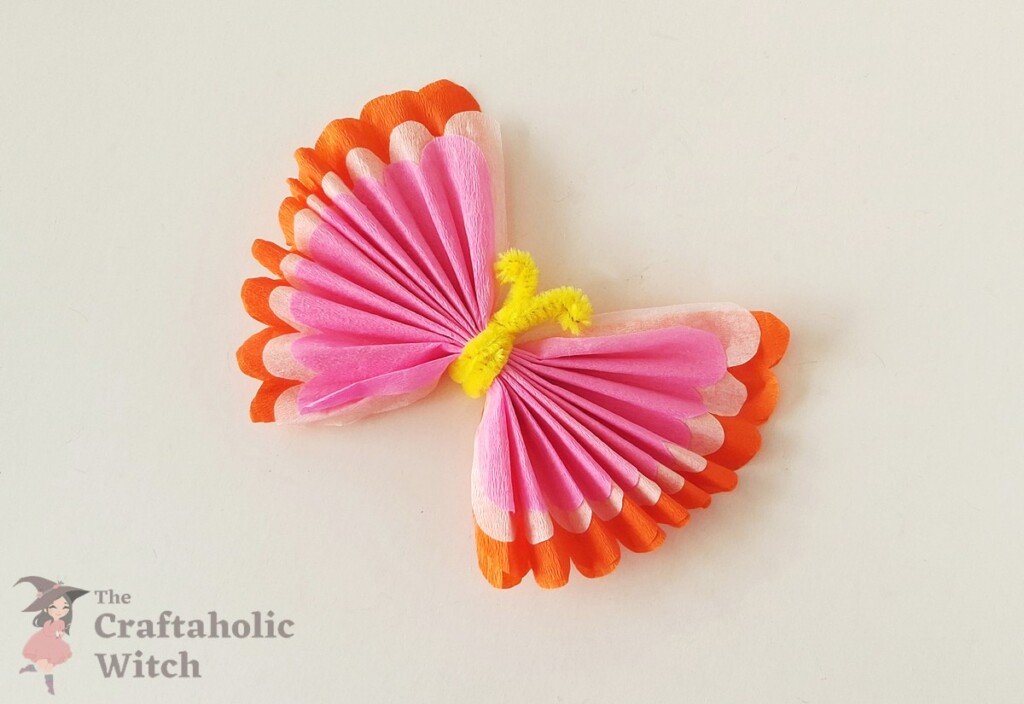
Twirl the tips of the pipe cleaner into small spirals or loops. You can curl them over a pencil if you want tight, even circles. The antennae are part of what makes the butterfly feel finished, so spending a few extra seconds here is worth it.
Step 13: Fan Out Both Sides to Form the Wings
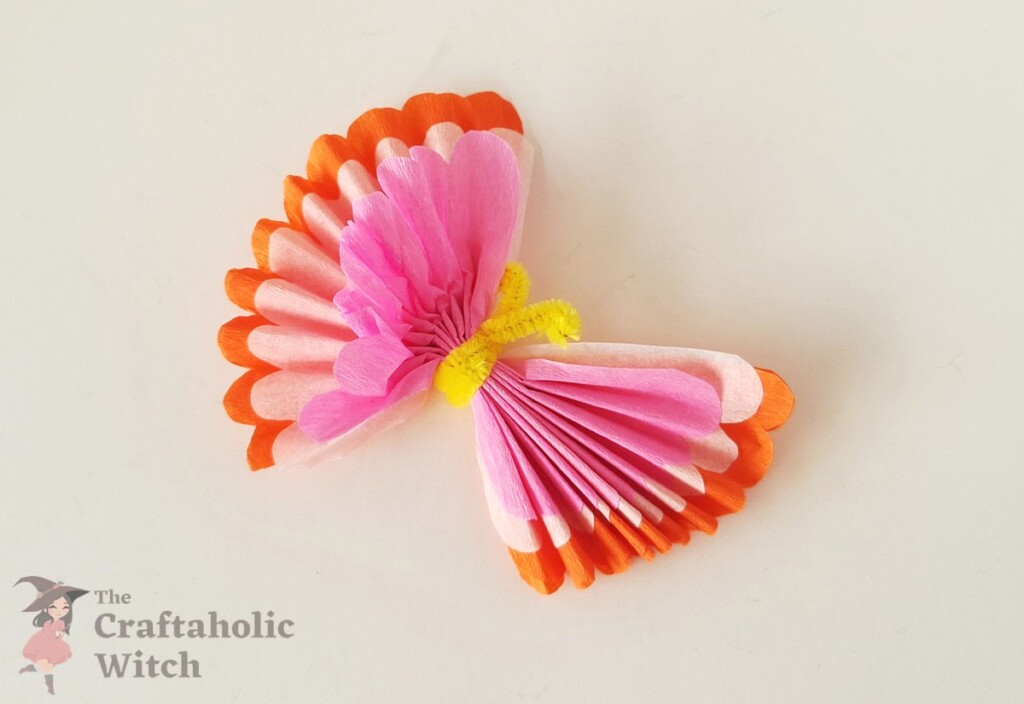
Gently pull the two sides of the folded stack apart until they’re spread evenly on both sides of the pipe cleaner. The basic butterfly wing shape should appear. Take this slowly. Tissue paper rewards patience.
Step 14: Separate Each Layer to Fluff the Wings
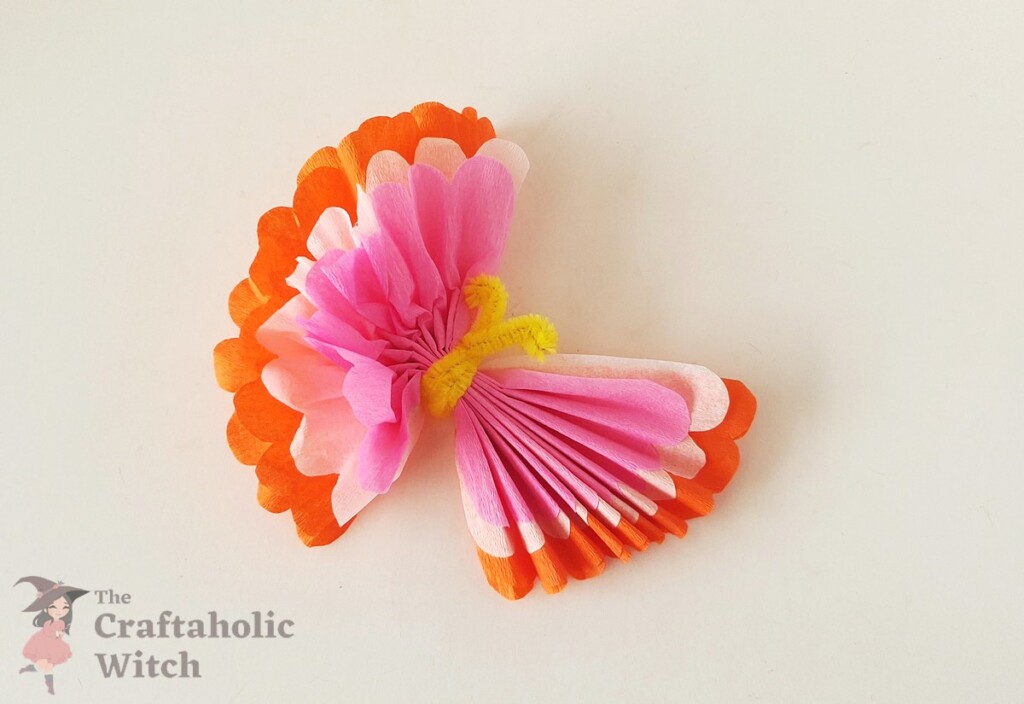
Work through each individual layer of tissue paper and gently lift it away from the ones below it, one at a time. This is the step that turns flat folded paper into soft, dimensional wings. Go slowly and lift from the center outward.
Step 15: Handle the Final Butterfly Gently
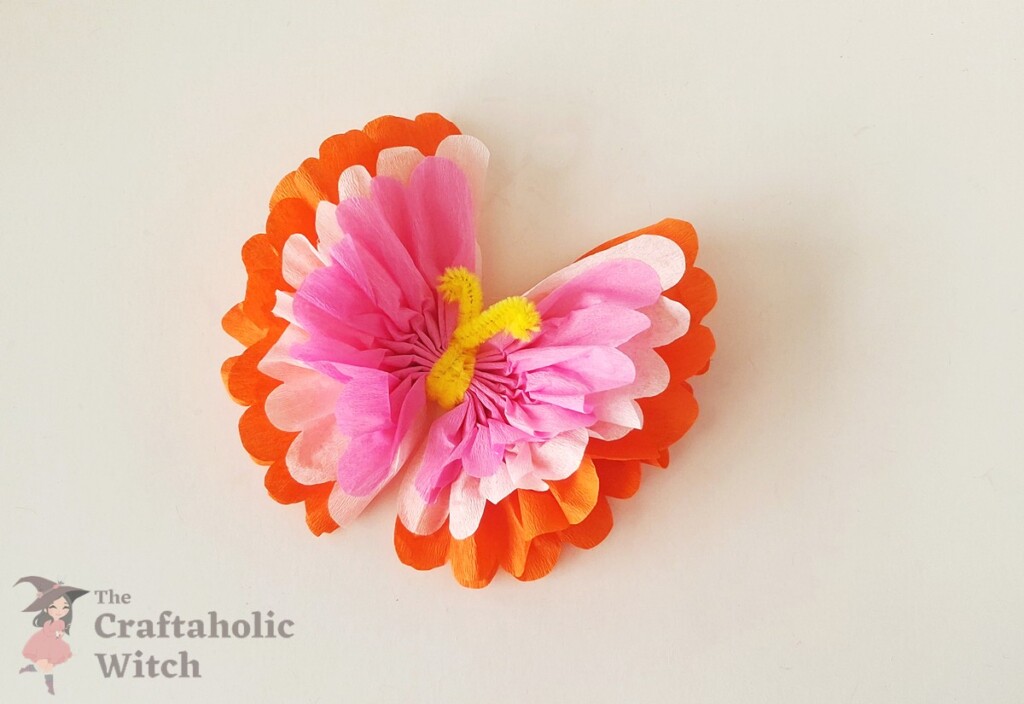
The finished butterfly is delicate by design. If a layer tears slightly while you’re fluffing, tuck the torn edge behind the layer below it. It usually disappears completely. Your tissue paper butterfly is done, and it took less than 15 minutes to get here.
Join Craft Challenge: Craft Your Calm
Make something that brings you a sense of peace, share a photo, and tell us your story. It's free to enter, open to everyone, and the entry with the most reactions takes home a $100 gift card. Takes five minutes to join.
Entries close August 30, 2026. No purchase necessary.
Parent and Educator Tips
This butterfly works well for kids as young as 5. Most of the steps, including the folding, cutting, and fluffing, are totally doable independently at that age. The one part that benefits from adult help is Step 10 and 11, wrapping and positioning the pipe cleaner. Kids under 7 often don’t have quite the grip strength to keep the folds pinched while twisting.
For classroom use, prep the tissue paper sheets ahead of time so each child has their three pieces ready. Everyone can then fold and fluff at their own pace without waiting on cutting. It also works well as a rotation station where kids add their completed butterflies to a shared garland or display board.
Skills kids practice: fine motor control (accordion folding), patience and care (the fluffing steps), and creative decision-making (choosing their color combinations).
For very young crafters or kids still building scissors skills, an adult can do the scalloped cuts in advance. The butterfly looks just as lovely with straight or lightly trimmed edges.
FAQ
Can I use regular gift tissue paper instead of craft tissue paper?
Yes, regular gift tissue paper works fine. The main difference is thickness. Very thin gift tissue tears more easily during the fluffing step, so handle it a little more gently than you would with craft tissue. Both give you the same soft, layered look when the wings are fully opened.
How do I make the butterfly bigger or smaller?
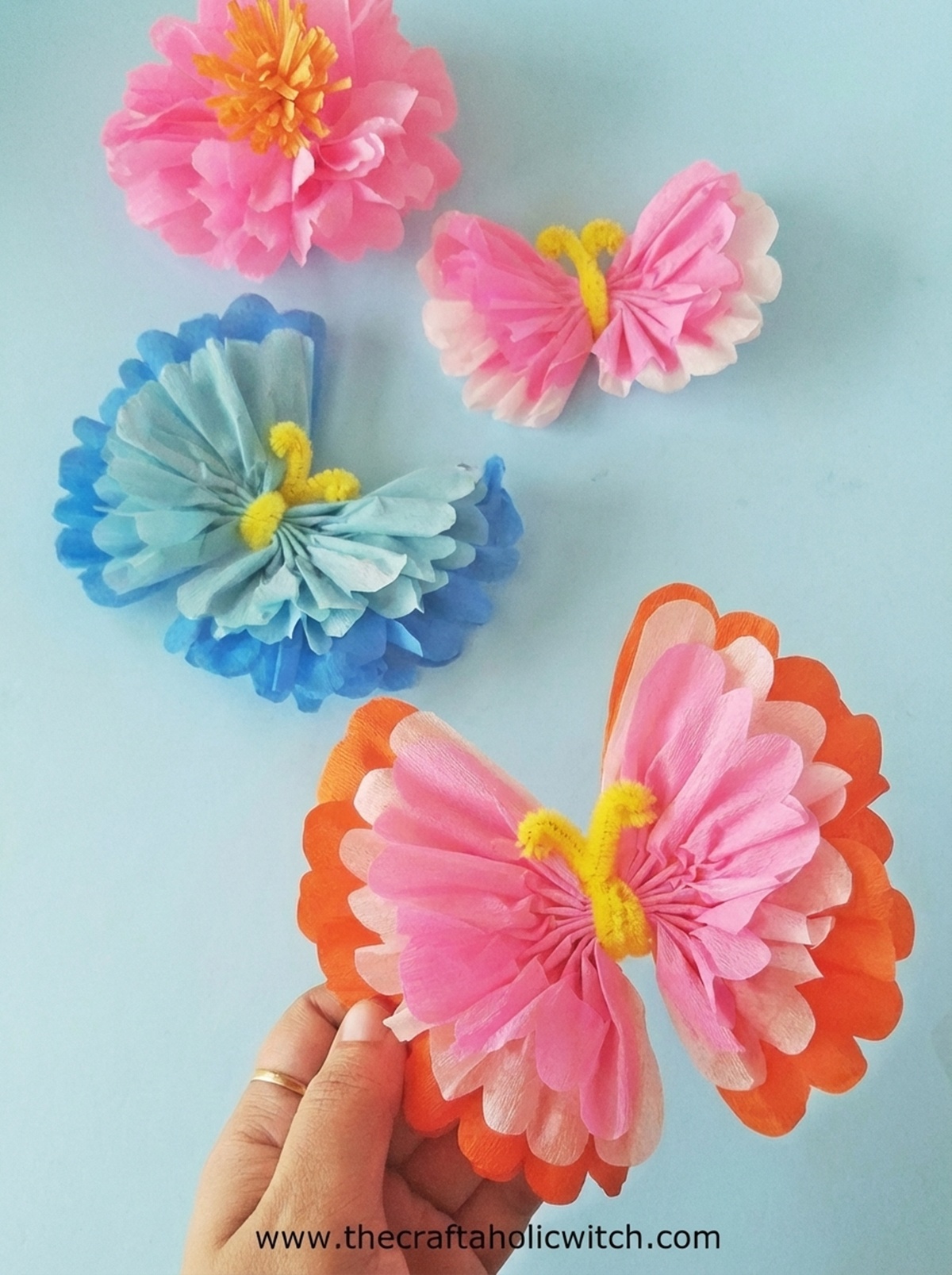
Cut your tissue paper strips longer for a larger wingspan and shorter for a miniature version. For party garlands, strips around 20-25 cm long work well. For gift toppers, 10-12 cm is plenty. The number of folds also affects how full the wings look, so don’t be afraid to experiment.
Does anything hold the butterfly together besides the pipe cleaner?
Nothing else is needed. The pipe cleaner tied at the center is what holds all the layers and folds in place, which is why this craft has no glue. It also makes it really easy to do with kids since there’s no drying time involved.
Can these be used as hanging decorations?
Absolutely. Before you curl the antennae into spirals, loop a piece of thread or thin ribbon around the pipe cleaner body and knot it. That loop gives you a ready-made hanger. String several together at varying heights for a mobile, or hang them from a branch or curtain rod for a spring window display.
0 Comments
Join the conversation
Log in to your Craftaholic Community account to comment, ask questions, and cheer on fellow makers.
Log in to comment