How to Make Plushies: Felt Soft Toy Tutorials and Free Patterns
I’m Muhaimina Faiz, a craft artist and educator who has been making plushies and soft toys since before this blog existed. Every pattern on this page is one I’ve made and tested myself, and every free template lives inside Craftaholic Community at no cost.
This page covers materials, construction methods, stitches, pattern reading, faces and expressions, and all 17 plushie tutorials on this site. If you’re starting from zero, read through to the beginner path section first. If you already know your way around felt, jump to the tutorials below.
What You Can Make (and Why It’s Worth Making)
A plushie is any stuffed fabric figure. That covers a lot: felt animals, fabric gnomes, stuffed seasonal ornaments, cloth dolls, miniature characters. If it’s made from fabric and filled, it counts.
What makes plushies different from most crafts is that the result gets kept. A felt bunny a child carries around for years. A gnome that comes out every Christmas. A little owl on a desk that someone refuses to throw away. That staying power is rare. Most craft projects end up in a drawer. Plushies end up on shelves.
It’s also one of the most forgiving crafts. Felt doesn’t fray. An uneven seam on a felt animal reads as handmade character, not error. The materials cost almost nothing: a pack of felt sheets, polyfill, needle and thread. Most people already have everything they need.
The range of what you can make is wide. Five minutes of browsing the tutorials on this page will show you that plushies go from a beginner gnome you can finish in 45 minutes to a Frida Kahlo doll that takes an afternoon. The gap between those two projects is mostly patience, not skill.
Materials: What You Actually Need
Before buying anything, understand what each material does. Most beginners overbuy. Here’s what the tutorials on this page actually use.
Choosing your fabric
Fabric choice is the most important decision you make for a plushie. It affects how easy it is to sew, how the finished piece holds its shape, and how long it lasts.
Felt (best for beginners)
Felt is the material behind most tutorials on this page, and for good reason. It doesn’t fray. You cut a shape and the edges stay clean. No hemming, no seam finishing. You can glue it or sew it. It comes in every color. It holds detail well when you layer cut pieces.
The main felt types you’ll encounter are craft felt (thin, inexpensive sheets from hobby stores, typically 1mm) and wool-blend or wool felt (thicker, denser, more durable, better for projects that will be handled a lot). For most projects on this page, craft felt works fine. For gnomes and pieces you want to last for years, wool-blend is worth the extra cost.
Avoid felt that’s so thin it feels like paper. It tears when stuffed. The right weight feels slightly spongy when you press it.
Minky and fleece (for soft, huggable plushies)
Minky is the fabric behind most commercial stuffed animals. It’s soft, slightly stretchy, machine washable, and comes in solids and prints. The stretch can be tricky for beginners because it shifts while you sew. Use clips instead of pins and sew slowly.
Fleece is a cheaper, less stretchy alternative to minky. It doesn’t fray, which makes it nearly as beginner-friendly as felt. Good for larger plushies where you want a softer texture than felt gives.
Neither minky nor fleece appears in the tutorials on this page, but they’re worth knowing about as your skills grow beyond felt projects.
Cotton quilting fabric
Cotton works well for smaller plushies with clean, crisp shapes. It frays, which means seam allowances matter. You cut, sew inside out, turn, stuff, and close. The result is more polished and less handmade-looking than felt, but requires more precision.
A good next step after you’re comfortable with felt construction.
Stuffing: how much and what kind
The most common beginner mistake is understuffing. A plushie that isn’t filled firmly looks deflated and sad. The second most common mistake is using the wrong stuffing for the project.
Polyester fiberfill (polyfill)
The standard for most plushies. Lightweight, machine washable, holds its shape well, and available everywhere. Bags of it are inexpensive and last a long time.
Use small amounts at a time. Pack stuffing into extremities first (ears, small limbs, tails) before filling the main body. Use a chopstick or pen to push stuffing into corners. When you think the plushie is full, add a little more. This is almost always the right call.
Scrap felt pieces
Felt offcuts make excellent stuffing for smaller plushies. They give a firmer feel than polyfill and are a good way to use up scraps. Cut them into small pieces (about 1-2cm) so they distribute evenly without creating lumps.
Plastic or glass pellets (for weighted bases)
Used in gnomes and standing figures to keep them upright. Add pellets to a small fabric sock or pouch inside the base of the figure rather than loose, so they don’t all shift to one spot. Glass pellets give a satisfying weight. Plastic pellets are lighter and cheaper.
Not required for any tutorial on this page, but worth knowing about for gnomes you want to stand on their own without toppling.
Tools worth having
You don’t need much. This is the complete list for every tutorial on this page:
- Sharp fabric scissors (dedicated to fabric only, never paper)
- Hand sewing needles in a few sizes
- Embroidery floss or thread in matching colors
- A fabric marker or chalk pencil for tracing patterns
- A chopstick or pen for pushing stuffing into small spaces
- Hot glue gun (for no-sew and gnome projects)
- Pins or clips for holding pieces in place while sewing
Sharp scissors make a bigger difference than most beginners expect. Clean cuts mean cleaner seams and a more polished finished piece. If your cuts are ragged, the whole plushie looks rough. Keep a dedicated pair for fabric only.
Two Ways to Build a Plushie
Every plushie on this page is built one of two ways. Understanding the difference before you start saves confusion later.
Sewn construction (stitch, stuff, close)
You cut two matching fabric pieces, sew around the edges leaving a small gap, stuff through the gap, then close it. This is the method behind all the felt animals, the bat, the dinosaur, the Totoro, and the Frida Kahlo doll on this page.
The steps are always the same: prepare the pattern pieces, add any face details to the front piece before sewing the two halves together, sew around the edges with a blanket or whip stitch, leave a gap, stuff firmly, close with a ladder stitch or tight blanket stitch.
The order matters. Always add embroidered eyes, stitched details, and layered felt pieces to the front of the plushie before you join the front and back together. It’s much harder to do it after.
No-sew construction (glue and assembly)
Used primarily for gnomes. You build the figure by shaping and gluing components: a cone hat, a stuffed body cylinder, a yarn beard, a bead or felt nose. No seams to close, no gap to stuff through. Hot glue holds everything together.
No-sew gnomes are faster to make and more forgiving. They’re the right starting point if you’ve never made a plushie before. The construction logic is the same as sewn plushies (body, head, hat, facial feature) but without the sewing.
In-the-round vs flat construction
Flat construction is what most felt animals use. Two mirrored pieces sewn together, giving a slightly 3D but essentially flat result. Simple and quick.
In-the-round construction uses multiple pattern pieces to build a fully 3D figure. A body piece, a base circle, side gussets. This is how professional stuffed animals are made. The Totoro plush on this page uses a version of this method. More pieces, more sewing, much more dimensional result.
Start flat. Move to in-the-round once you’re comfortable with the basics.
Stitches and Techniques
You don’t need to be a skilled sewer to make the projects on this page. But knowing these five things will save you time and improve your results significantly.
The blanket stitch
The main stitch for felt plushie making. It runs along the edge of two fabric pieces and joins them with a visible, decorative border. It looks intentional rather than messy, which is why it’s preferred over a hidden seam for felt work.
The technique: insert the needle through both felt layers near the edge, pull the thread through, loop the needle back through the thread loop before pulling tight. Repeat at even intervals. Ten minutes of practice on scrap felt is enough to get it consistent.
The whip stitch
Faster and less visible than the blanket stitch. Loop the thread over the edge of both fabric pieces at a slight angle, spacing stitches evenly. Good for seams where the stitching won’t show or when you want to work quickly.
The running stitch
In-and-out through the fabric at even intervals. Used for gathering, basting pieces in place before final sewing, and light seams. Not strong enough on its own for stuffed pieces, but useful for attaching smaller felt details before the main sewing.
The ladder stitch (invisible close)
The stitch you use after stuffing to close the gap. Done correctly, the seam is invisible. You run stitches along each folded edge of the gap alternately, then pull the thread to draw the edges together.
For felt plushies, a tight blanket stitch along the gap also works well and is simpler. The ladder stitch is worth learning if you’re working with cotton or want a truly seamless finish.
Satin stitch (for embroidered details)
Parallel stitches placed close together to fill in a shape. Used for embroidering mouths, solid noses, and color-filled details. Takes a little practice to keep the stitches even and the edges clean, but it’s the stitch behind most of the expressive faces you see on well-made plushies.
| Stitch | When to use it | Difficulty |
|---|---|---|
| Blanket stitch | Joining felt edges, visible seams, decorative finish | Beginner |
| Whip stitch | Fast joining, hidden seams | Beginner |
| Running stitch | Gathering, basting, light attachment | Beginner |
| Ladder stitch | Closing stuffing gaps invisibly | Intermediate |
| Satin stitch | Embroidered faces, filled detail areas | Intermediate |
| French knot | Small round eyes, textured surface detail | Intermediate |
Making Faces: Eyes, Noses, and Expressions
This is the part most tutorials skip over. A plushie can be perfectly constructed and still look lifeless if the face isn’t right. The face is what gives a plushie its personality.
There are four main approaches, and they suit different projects and skill levels differently.
Layered felt cutouts
Cut small circles or shapes from felt in contrasting colors and layer them on the face. A white circle, a smaller black circle on top, a tiny white highlight dot on the black. Attach with a few stitches through all layers. This is the method used in most tutorials on this page. It’s fast, clean, and doesn’t require embroidery skill.
The key is scale. Eyes that are too small disappear. Eyes that are too large look cartoonish. A good starting ratio is eyes roughly 1/5 the width of the face apart, about 1/3 of the way down from the top of the head.
Embroidery
Stitched directly onto the felt using embroidery floss. Satin stitch for filled eyes and noses, straight stitches for mouths. More time consuming but gives a softer, more handmade look. Better suited to small plushies where safety eyes would be too bulky.
The satin stitch nose common in felt animals: bring the thread up at the top of the nose area, lay stitches side by side going down, then finish with a small straight stitch across the bottom. Three or four passes is usually enough.
Safety eyes (plastic domed eyes)
Push-through eyes with a washer backing. Available in craft stores in sizes from 4mm to 24mm. Give a professional, glassy finish. Not suitable for young children because the backing can come loose. Good for decorative plushies and adult gifts.
Safety eyes must be attached before you close the plushie. Push the stem through the fabric from the front, place the washer on the back, and press firmly. They’re very difficult to remove once set.
Painted or marker details
Fabric markers or a small amount of acrylic paint work for adding color details to felt. Good for adding blush to cheeks (the pink circles you see on kawaii-style plushies), drawing subtle smile lines, or adding detail to painted wooden beads used as noses.
Before stitching any face details permanently, lay the pieces on the front felt piece with pins or a tiny dot of washable glue and step back. Look at the whole figure together. Small position adjustments change the entire expression. Moving the eyes 2mm closer together makes the plushie look younger. Moving them apart makes it look more mature. Get the placement right before committing.
How to Read and Use a Plushie Pattern
Every plushie pattern on this site is a free printable PDF. Most beginners make one of two mistakes when printing: scaling it wrong, or cutting in the wrong place. Here’s how to avoid both.
Print at 100%, not “fit to page”
This is the most common mistake. When your printer is set to “fit to page” or “scale to fit,” it shrinks or enlarges the pattern to fill the paper. Your finished plushie ends up a different size than intended. Always print at 100% actual size. Most patterns include a test square (usually 1 inch or 2.5cm) so you can measure and confirm the scaling is correct before cutting.
Seam allowance: cut on the line or outside it?
This is the second source of confusion. A seam allowance is the gap between your cut edge and where you sew. When a pattern says “seam allowance included,” you cut on the line and sew inside it. When it says “add seam allowance,” you cut outside the line by the stated amount.
All patterns on this site that use sewn construction include the seam allowance. Cut on the line. For felt patterns that use visible edge stitching (blanket stitch), there’s no seam allowance because the stitch sits on the edge.
Tracing onto felt
Use a fabric chalk pencil, air-erasable fabric marker, or a regular chalk pencil. Avoid permanent markers and ballpoint pens. They bleed through light-colored felt and show on the finished piece. Trace lightly on the back of the felt so the line doesn’t show from the front. Cut just outside the traced line for hand-sewn felt work, or exactly on the line for machine sewing.
Grain line and nap direction
Felt doesn’t have a grain or nap the way woven or pile fabrics do, so this matters less for the projects on this page. For minky and fleece, always cut pieces with the nap going in the same direction or the finished piece will reflect light differently on different panels.
What Separates a Good Plushie from a Bad One
After making dozens of these, here’s what actually makes the difference between a plushie that looks handmade (in the good way) and one that looks rushed.
Even, clean cuts. Ragged edges from dull scissors telegraph through every seam. Sharp scissors are worth the investment.
Consistent stitch spacing. Blanket stitch that varies from 2mm to 8mm gaps looks messy even if it’s technically correct. Practice on scrap felt until your spacing is even, then sew the real piece.
Correct stuffing amount. Too little and the plushie looks sad and flat. Too much and the seams strain and distort. The right amount is when the finished piece holds its shape firmly but doesn’t feel like it’s about to burst. For smaller pieces: firm. For larger pieces: firm but slightly yielding.
Attention to the face. Placement, scale, and consistency of the face elements make more visual impact than anything else. Spend extra time here.
Clean closing stitch. The stuffing gap closure is where a lot of plushies fall apart visually. Take your time closing it and match the thread color exactly to the felt.
A Beginner Path Through Plushie Making
If you’ve never made a plushie, this order builds skills in the right sequence.
Project 1: No-sew gnome. No sewing required. Teaches the logic of how plushies are assembled without requiring seam work. Finish one and understand the construction before moving on.
Project 2: Simple felt animal (bunny or owl). Small, simple shape. Practice cutting felt cleanly, tracing patterns accurately, and blanket stitching basic shapes. Don’t skip this step to go straight to something more complex.
Project 3: Something with more detail. The bat, the dinosaur, or the Frida Kahlo doll. By your third plushie, the process will feel natural and you can focus on the face and finishing rather than the construction steps.
All 17 Plushie Tutorials
Gnomes
The most searched plushie style on this site. Gnomes adapt to every season and require almost nothing to make. Start here.
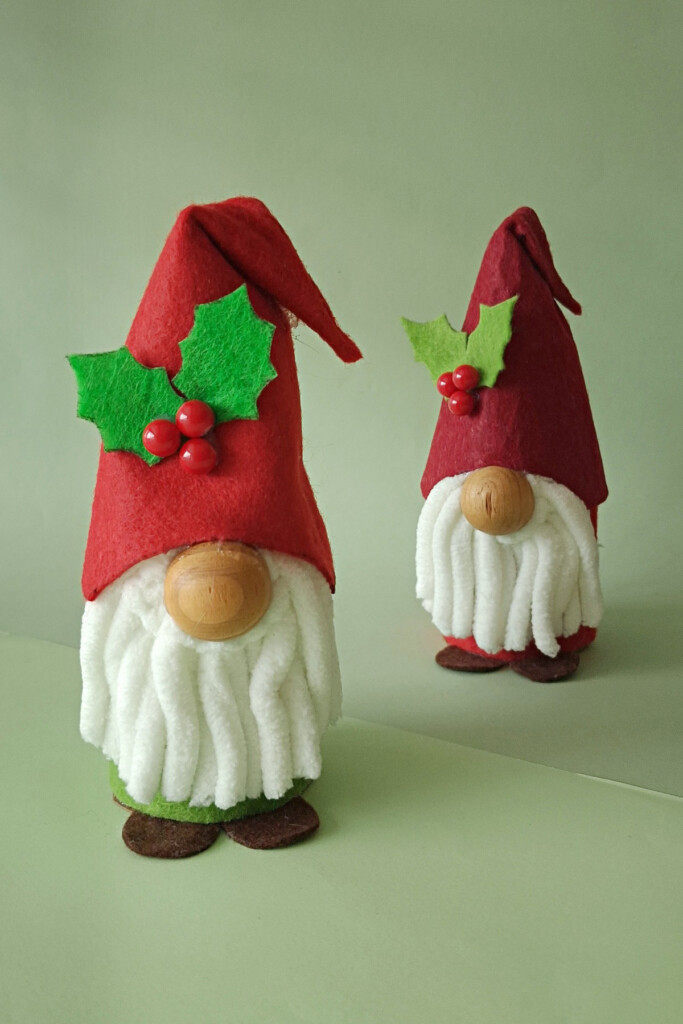
How to Make a Gnome for Beginners (Free Template)
No sewing. Uses felt, cardboard, and yarn. The best first gnome project and a great craft with kids ages 6 and up.
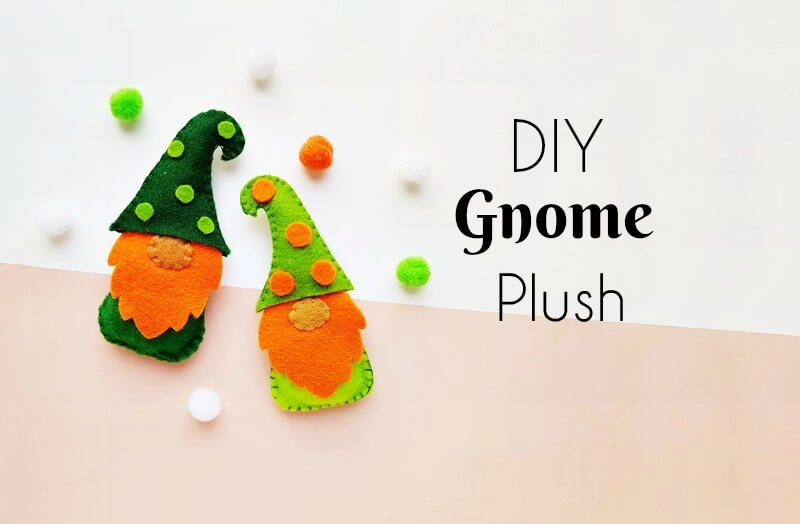
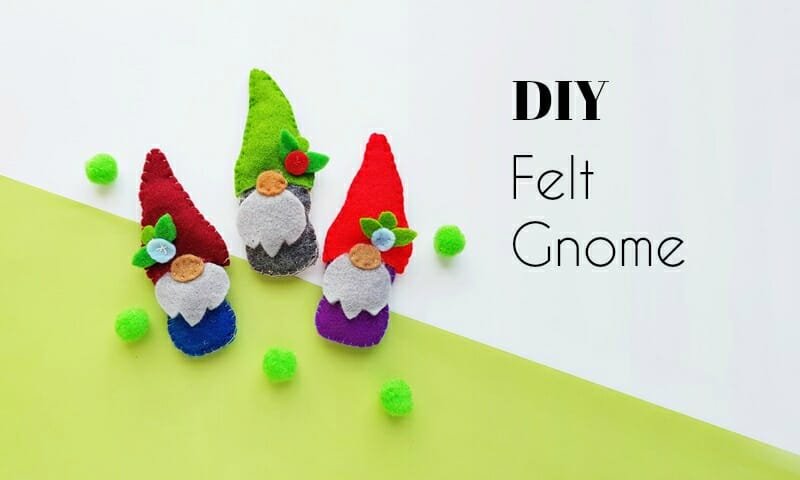
DIY Gnome Plush (Free Sewing Pattern)
A sewn felt gnome with free pattern. Beginner-friendly construction with hat, body, beard, and nose. Mix felt colors for variations.
DIY Gnome Plush: How to Make a Gnome Step by Step
Eight-step gnome construction with hat, clothing, beard, and nose. Hot glue or hand sewing both work. Free template included.
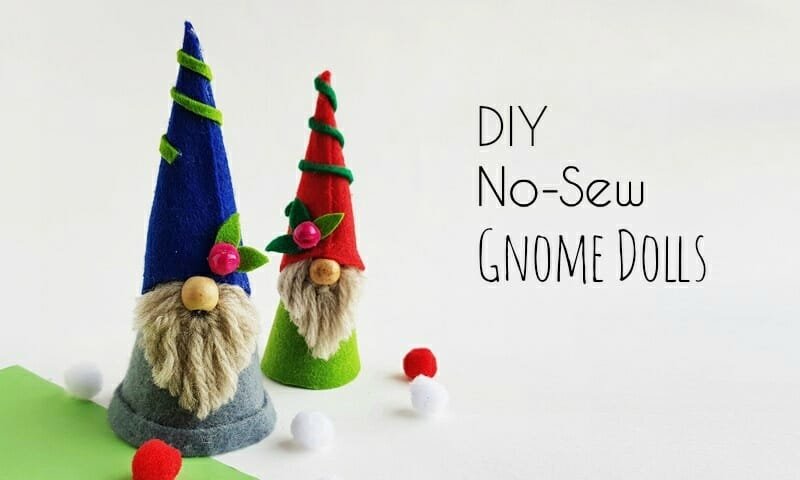
Easy No Sew Gnome Dolls (Free Pattern)
No sewing at all. Uses felt, cardstock, and yarn. Great for Christmas decorations and a good way to use up scrap materials.
How to Make Felt Fall Gnomes (Free Pattern and Video)
Autumn-colored gnomes for fall and Thanksgiving decor. Includes a full video tutorial and free downloadable pattern.
Felt Animals
Felt animals are where most crafters go after gnomes. Flat sewn construction, free patterns for every project, and results that work as gifts, ornaments, and keepsakes.
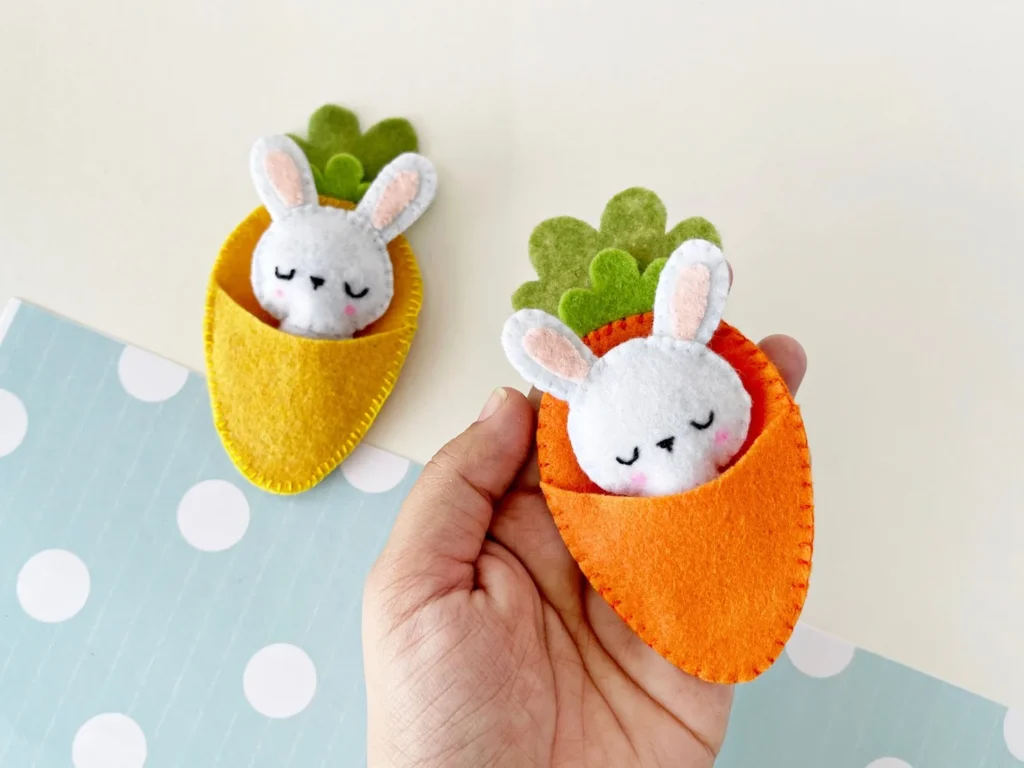
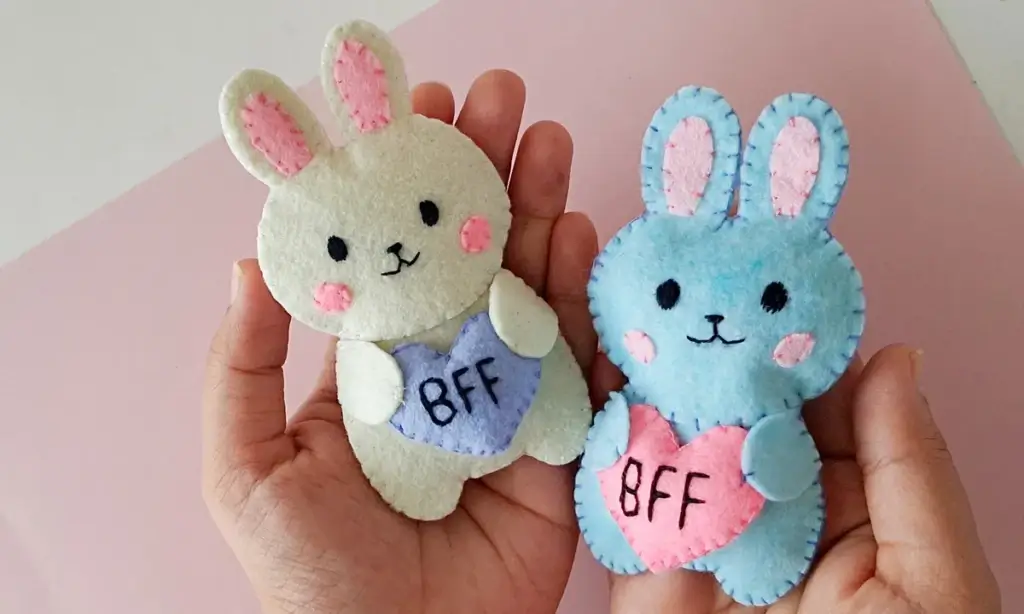
Free Bunny Sewing Pattern and DIY Felt Bunny Tutorial
One of the most-made projects on this site. A classic felt bunny with ears and a belly patch. Free pattern. Perfect for Easter or any season.
DIY Felt Llama Plush (Free Pattern)
A felt llama with saddle detail and a clean, simple pattern. Eight-step tutorial. A good first felt animal project.
How to Make a Stitched Felt Owl Plush (Free Pattern)
Beginner-friendly felt owl with embroidered eyes. Makes a beautiful handmade gift. Works as a Valentine’s Day project or any time of year.
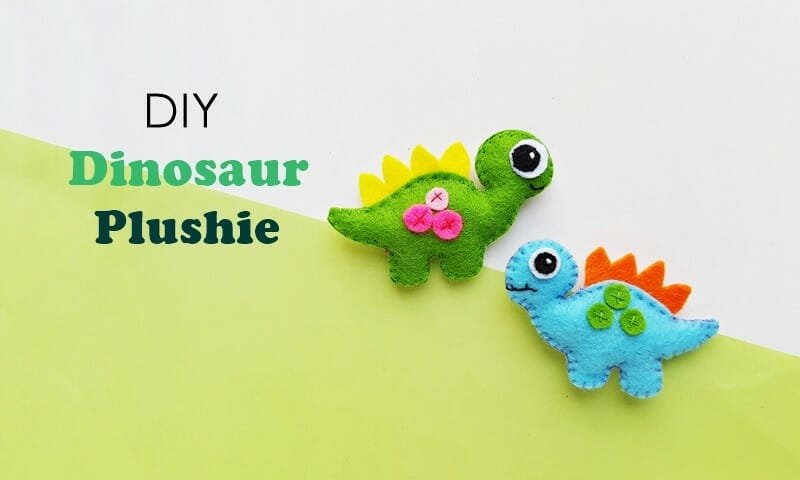
How to Make a Stuffed Dinosaur Plushie (Free Sewing Pattern)
A colorful felt dinosaur with scale and eye details. Great for kids and a well-loved gift for dino fans of any age.
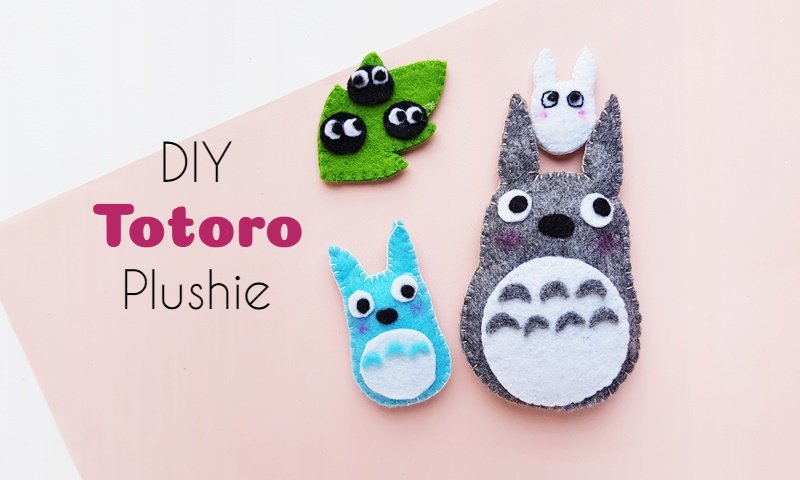
DIY Totoro Plush (Free Pattern)
A felt Totoro set inspired by Studio Ghibli. Free patterns for all four characters. One of the most-shared tutorials on this site.
Special Projects
More detail, more steps, results worth displaying or gifting. These are the projects to attempt after you’ve made two or three simpler plushies.
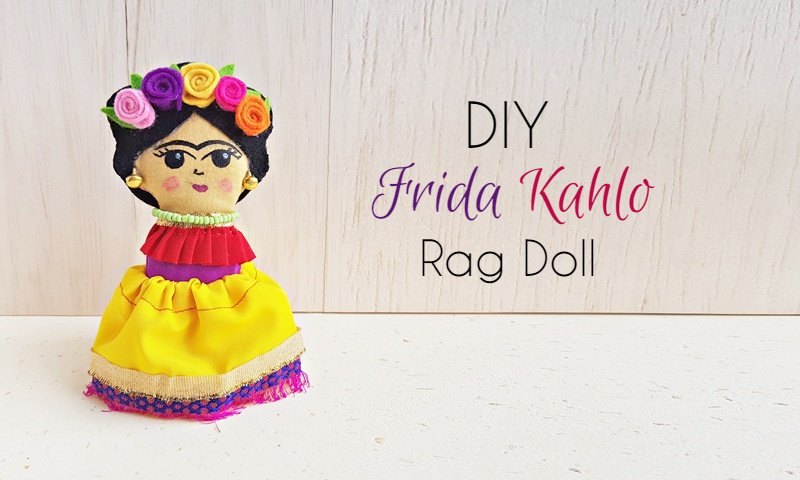
DIY Frida Kahlo Doll
A detailed felt doll with embroidered facial features and layered clothing. A more involved project but the result is genuinely special. A real conversation piece.
Felt Heart Plush with Cross Stitch Letters
A stuffed heart with a cross-stitched initial or word on the front. A personalized handmade gift that takes about an hour.
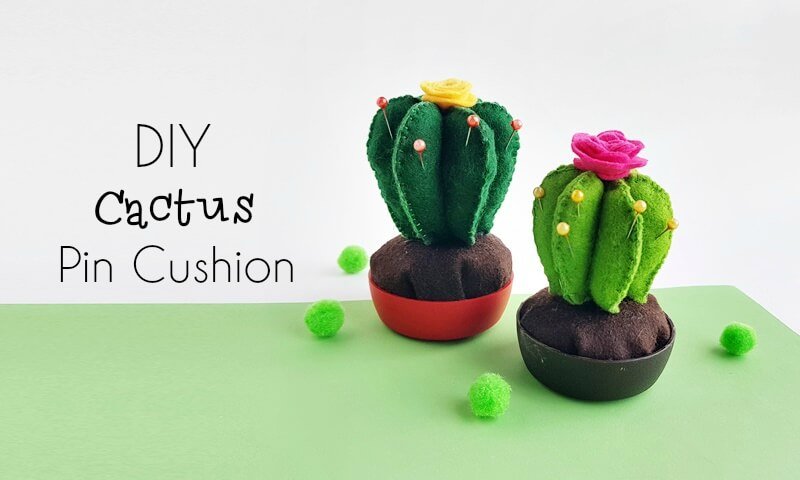
DIY Cactus Pincushion
A stuffed felt cactus that doubles as a pincushion. Practical and satisfying to make. A good project for your craft desk.
Seasonal Projects
Small stuffed figures, felt ornaments, and holiday decorations. These are the plushies that come back out every year.
Halloween
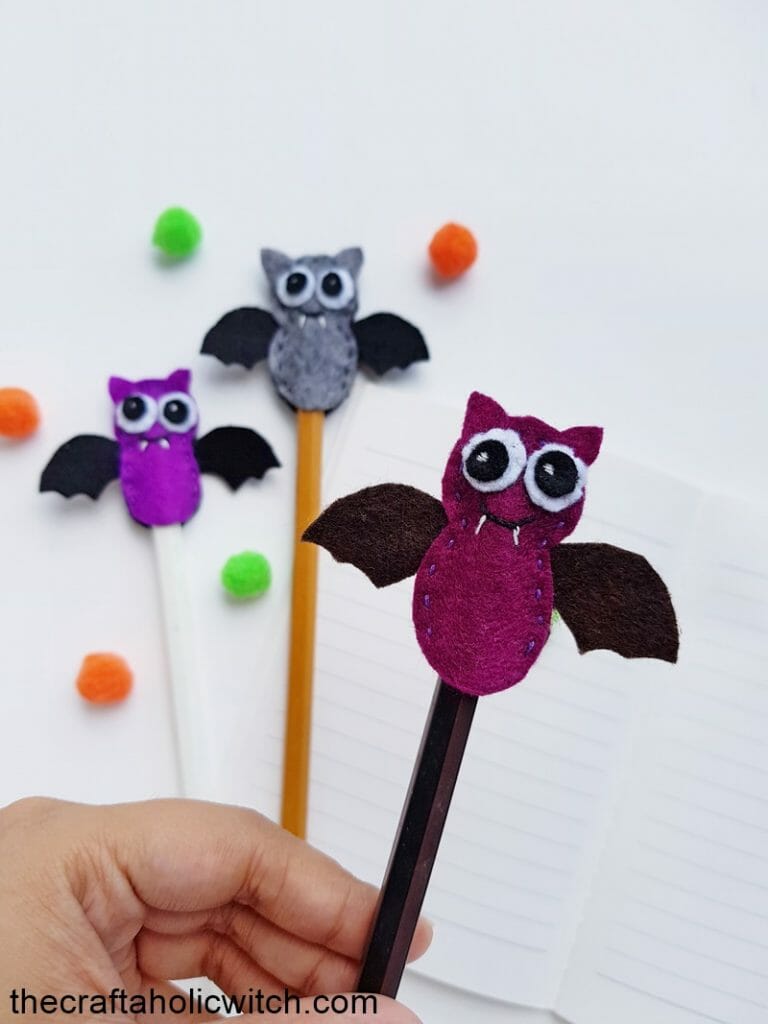
How to Make Bat Plush (Free Bat Sewing Pattern)
A kawaii-style felt bat with wings, embroidered fangs, and rosy cheeks. Works as a Halloween ornament, garland piece, or goodie bag addition.
How to Make Halloween Garland for Beginners (3 Free Patterns)
Make a garland from small felt plushies: candy corn, ghost, and pumpkin. Each piece also works as a standalone decoration. Three free patterns.
Easter and Spring
Pattern Roundup
Plushies as Gifts: Who They’re Perfect For
Handmade plushies are one of the best gifts you can give because they’re impossible to buy. A felt bunny you made for someone is not something they can find on Amazon. That distinction matters more than most people realize when they’re deciding what to give.
They work especially well as gifts for young children (ages 1 to 8), new parents, teachers, and anyone who appreciates handmade things. The personalized heart plush is a particularly good choice when you want to give something small but meaningful. The Frida Kahlo doll is for someone who has strong taste and would appreciate the detail.
For seasonal giving, gnomes are the most reliable choice. They’re fast to make, easy to scale up for multiple gifts, and suit every recipient from children to grandparents.
Caring for Finished Plushies
Felt plushies are not machine washable. Felt felts further when it gets wet and agitated, which distorts the shape and ruins the construction. To clean a felt plushie, spot-clean with a damp cloth and mild soap. Let it air dry completely before handling.
If you want a plushie that can go in the wash (for children, especially), use fleece or minky instead of felt, sew with polyester thread, and use polyfill stuffing. Close the stuffing gap with extra reinforcing stitches. Wash on cold gentle and air dry.
For storage, keep plushies out of direct sunlight. Felt fades over time with UV exposure. Store seasonal gnomes and ornaments in a container rather than a plastic bag, which can crush them.
Free Plushie Patterns
Every tutorial above that has a printable pattern is available as a free download inside Craftaholic Community in the Free Templates and Tutorials space. You’ll find all patterns organized and easy to browse.
Get All the Free Plushie Patterns
Download every pattern from this page in one place. Share what you make in the I Made This space. Join free.
Join Craftaholic CommunityFree to join. All patterns included.
Related Crafts Worth Exploring
If you’ve worked through the projects here and want to branch out, two silos connect naturally.
Crochet: The 3D shaping logic in plushie construction translates directly to crochet amigurumi. If you can stuff and close a felt animal, you already understand how crochet plushies work. The crochet page covers everything from your first stitch.
Kids Crafts: Many plushie projects, especially gnomes and simple felt animals, make excellent projects for children. The Kids Crafts silo has more age-appropriate projects for classrooms and crafting with children.
For full seasonal project roundups that include plushies alongside paper crafts, origami, and home decor, the Halloween Crafts page and Christmas Crafts page are worth bookmarking.
Frequently Asked Questions
What felt is best for making plushies?
Use medium-weight craft felt around 1 to 2mm thick. It holds its shape, doesn’t fray, and is easy to cut and sew by hand. Too thin tears when stuffed. Too thick is hard to sew neatly for small patterns. For projects you want to last years, wool-blend felt is worth the extra cost.
Do I need a sewing machine to make plushies?
No. Every tutorial on this page works by hand. Felt doesn’t fray, so hand sewing with a blanket stitch or whip stitch gives clean results. A sewing machine speeds things up but is not required to start. Many experienced plushie makers prefer hand sewing for the control it gives on small pieces.
What stuffing do I use for felt plushies?
Polyester fiberfill (polyfill) is the standard. Lightweight, washable, widely available. Scrap felt pieces also work well for smaller plushies. Avoid cotton wool: it clumps over time and gives an uneven shape. Always stuff more firmly than you think you need to.
How long does it take to make a felt plushie?
Simple projects like no-sew gnomes take 30 to 45 minutes. Small felt animals (bunny, owl, llama) take about an hour. More detailed projects like the Frida Kahlo doll or Totoro set take 2 to 3 hours. Most tutorials on this page are designed to finish in a single sitting.
What stitch do I use to close a plushie after stuffing?
The ladder stitch gives the cleanest invisible close. For felt plushies, a tight blanket stitch or whip stitch along the gap also works well and is simpler for beginners. Match your thread color to the felt exactly so the closing stitches blend in.
Can I sell plushies made from these patterns?
The patterns on this site are free for personal use and small-scale selling, such as craft fairs and Etsy shops. They are not for mass production or resale of the patterns themselves. If you sell something you made from one of these patterns, a credit or mention is appreciated but not required.
Where can I download the free plushie patterns?
All free patterns are inside Craftaholic Community in the Free Templates and Tutorials space. Joining is free and takes about a minute.